"It's all about places, faces and feelings… Now, 'TTFP': Take the … 'Fffff—-fantastic' Picture!" (Friend and Photographic Mentor, Monte Zucker 1929-2007)
Over the past several months, That’ll Do slowly became something I hadn’t planned. It started as a collection of songs about ordinary moments, but somewhere along the way those moments began talking to one another.
A grocery store aisle.
Three green lights in a row.
The same coffee cup every morning.
A nickname between two people who know each other well enough to laugh without explaining.
A walk back through a hometown that no longer looks the way it did—and somehow feels exactly the way it should.
Musically, this is probably my most guitar-forward record yet. It leans into melodic roots rock with Americana storytelling, weeping pedal steel, conversational guitars, and songs that trust the listener to discover their meaning instead of announcing it.
I found myself writing less about lessons and more about recognition. Not everything needs fixing. Not every misunderstanding needs correcting. Sometimes the best thing we can do is notice what’s already there.
The title That’ll Do isn’t about settling.
It’s about realizing that an ordinary day, shared with ordinary people who are doing their best, can be more than enough.
I hope these songs feel like someone saved you a booth by the window.
That’s the idea behind I Meant Well, the new Americana and alt-country album from Bill Leyden.
Built around nine vignette-driven songs, the album explores the moments that rarely make headlines but somehow stay with us for years: a glance held a little too long, a lesson learned too late, a local legend everyone knows, a kindness nobody notices, and the quiet realization that good intentions alone don’t always guarantee good outcomes.
Rather than telling one continuous story, I Meant Well unfolds as a series of interconnected moments. The songs take place in dance halls, roadside bars, small-town gathering places, and the private spaces people carry around inside themselves. Throughout the album, a single narrator observes the humor, irony, awkwardness, and humanity that define ordinary life.
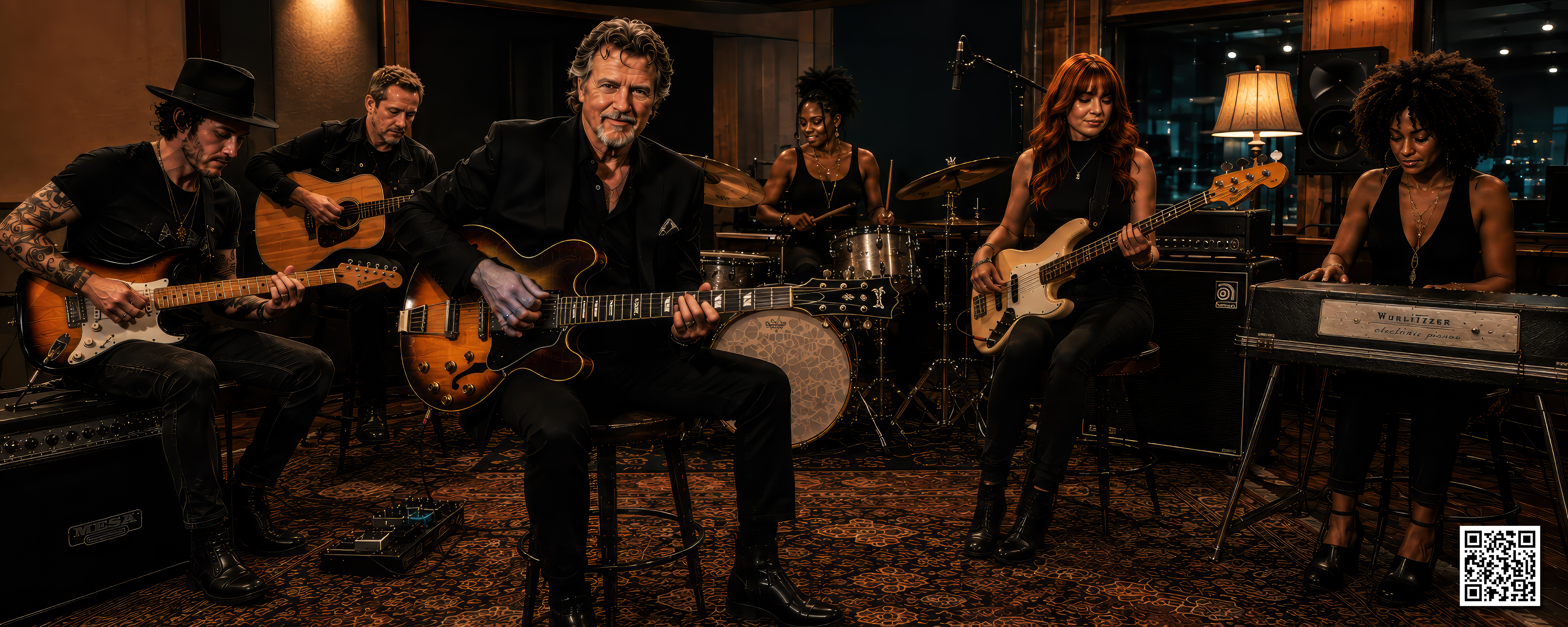
Musically, the record blends Americana, alternative country, roots music, and storytelling traditions into a guitar-forward sound built around conversational vocals, expressive Stratocaster leads, pedal steel textures, and close country harmonies. The result is an album that feels equally at home with classic country storytelling and modern Americana sensibilities.
At its heart, I Meant Well is not about perfection. It’s about accountability, humility, forgiveness, and the belief that even imperfect people continue reaching toward something better.
In a world that often rewards certainty, these songs are more interested in questions than answers.
Sometimes that’s enough.
The Longing for Good
The people in these songs are rarely heroes or villains. They hesitate, misread situations, hold back, speak too late, stay too long, leave too soon, and occasionally stumble into wisdom without realizing it. Like most of us, they are trying to make sense of themselves while living in the company of other imperfect people doing the same.
The album isn’t interested in certainty. It is interested in grace. In the possibility that good intentions matter, even when they are incomplete. In the idea that a meaningful life is built less from grand victories than from small acts of restraint, kindness, accountability, humor, and perseverance.
At its core, I Meant Well is a reflection on the longing for good—the quiet belief that despite our mistakes, misunderstandings, and limitations, there is still something worth reaching for, something worth becoming, and something worth forgiving.
What if the moment didn’t mean anything… until later?
Late Night West Coast by Bill Leyden is a cinematic indie rock album built for late-night drives, quiet rooms, and the kind of thoughts that only show up after everything’s already happened.
This is not a record that demands your attention.
It’s one that earns it.
A Guitar-Driven West Coast Sound (Without the Noise)
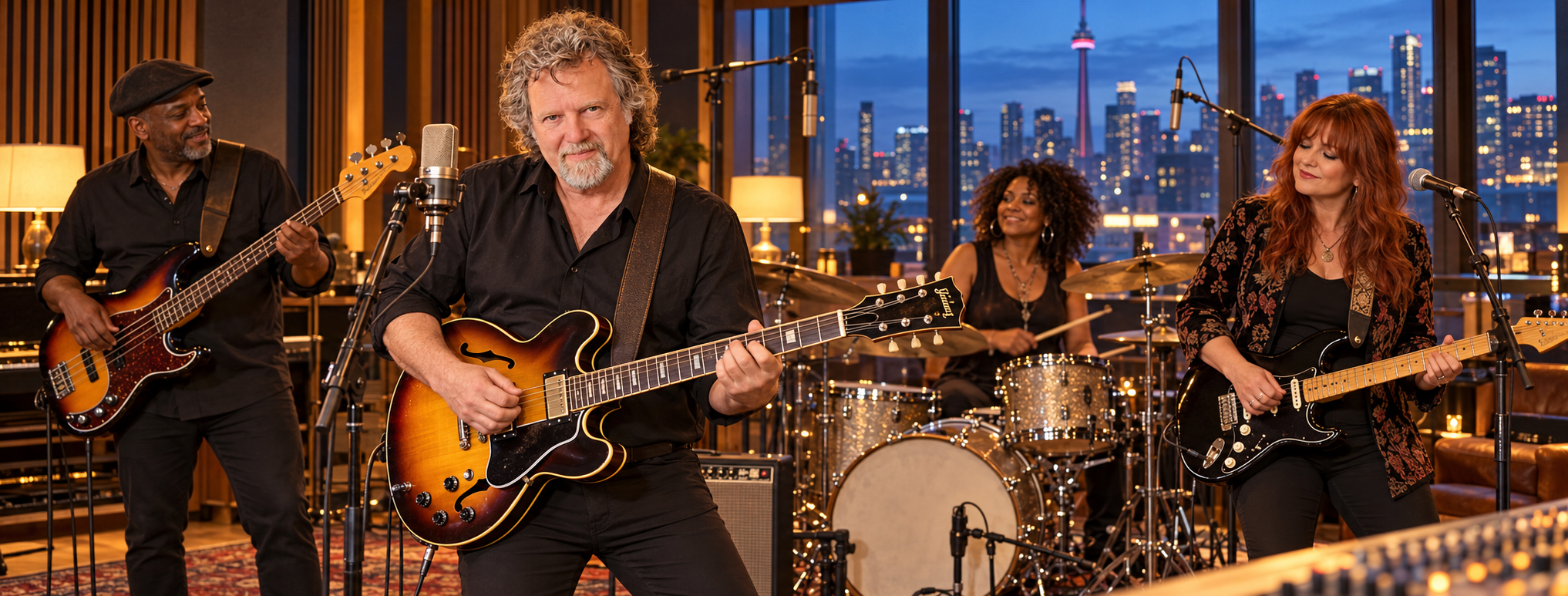
At its core, Late Night West Coast is a guitar-forward indie album—stripped down, intentional, and grounded in real musicianship.
ES-335 lead phrases that drift in like memory fragments
A tight rhythm section that holds everything together without getting in the way
The production stays dry, intimate, and close-mic’d, avoiding the washed-out reverb common in modern indie. The result is a sound that feels immediate—like you’re sitting in the room, not observing from a distance.
Music That Feels Like a Memory Forming
Most albums try to tell you a story.
This one lets you recognize one.
The writing across Late Night West Coast is:
conversational
restrained
built on small, real moments
No over-explaining. No emotional overreach.
Just details:
a light left on upstairs
a voice through the wall
the hum of a place you’ve been before
It’s less about what happened—and more about when it finally made sense.
Cinematic Indie Rock That Fits Without Trying To
While the album naturally lends itself to film and TV, it was never over-engineered for sync.
Instead, each track simply works:
clean intros that set a scene immediately
subtle dynamic lifts that feel natural
consistent tone from start to finish
The result is music that drops into a moment effortlessly—because it already feels like one.
A Late-Night West Coast Atmosphere
This album lives in a very specific space:
Los Angeles after midnight
hotel hallways and empty lobbies
slow traffic heading toward the ocean
conversations that didn’t quite finish
Every track feels like the same city—just a different night.
Where to Listen
Late Night West Coast by Bill Leyden is available on all major streaming platforms:
There’s a certain kind of record that doesn’t try to convince you of anything. It just sits with you.
A Place to Ride It Out, for Now was built that way—track by track, without rushing the outcome. No big statements. No forced conclusions. Just moments observed, decisions made (or not made), and the quiet tension of staying versus going.
This is an Americana-leaning, indie-adjacent record—band-forward, conversational, and grounded in detail. The songs don’t explain themselves. They don’t need to.
The album follows a subtle arc—starting with pure observation and ending with action. Along the way, the narrator isn’t always right, doesn’t always understand, and doesn’t always resolve anything cleanly.
That’s the point.
These songs live in the space where things aren’t broken enough to fix, but not quite right either.
You’ll hear:
Fingerpicked guitar work and ES-335 lead lines that speak more than they show off
Tight, conversational rhythm section playing like a band in a room
Close, dry vocals that feel like they’re sitting next to you, not performing at you
No excess. No decoration. Just what belongs.
Standout moments
“We Don’t Talk About Leaving” — what happens when something is clearly there… and no one moves it
“I Went Anyway” — not a dramatic exit, just a decision that finally happens
Several tracks where the narrator gets it wrong—or never quite gets it at all
The idea behind it
This record isn’t about answers. It’s about behavior.
What people do when they don’t say what they mean. What stays in a room. What eventually leaves anyway.
Final note
If you’ve ever stayed longer than you should have—or left without explaining it—this record will probably feel familiar.
There’s a way a man can talk himself out of what he means.
As Real as I Get is a new indie Americana album by Bill Leyden that lives in those moments—quiet conversations, things said a little too quickly, and the space where something true slips through before it gets reshaped.
This isn’t a record about fixing anything.
It’s about noticing.
Across nine tracks, Leyden blends indie songwriting with Americana storytelling, drawing on conversational lyrics, subtle emotional shifts, and understated performances. Fans of artists like Billie Eilish (in restraint and intimacy) and modern Americana will recognize the tone—but the voice here is distinctly his own.
It started with quiet evenings on the Gettysburg battlefield.
Some places in America never quite fall silent.
Years ago, when I was in the service, I often traveled back and forth to Washington, D.C. on temporary duty. On several of those trips I found myself stopping in Gettysburg. Eventually I began staying at the Doubleday Inn, right there on the battlefield itself.
In the mornings I would drive from that quiet, rolling ground into Washington. But every evening I returned to the fields.
Gettysburg is not a loud place. It is wide and still. The wind moves through the grass, and the monuments stand like quiet witnesses. Walking those fields, it’s impossible not to feel that something happened there that still echoes.
You start to imagine the letters that were written. The letters that were never sent. The men who never returned to read them.
Those impressions stayed with me.
Years later, while working in software development, I had the opportunity to attend a Windows World competition in Atlanta hosted by Bill Gates and Microsoft. Atlanta itself carries its own deep Civil War memory. Even driving along the freeways, you notice something unusual: nearly every exit seems to bear the name of a battlefield.
Kennesaw. Marietta. Resaca. Chickamauga.
The war is still written across the landscape.
What struck me most wasn’t politics or strategy—it was the feeling that the stories had never quite left. The Civil War wasn’t just something in a history book. It lived on in the places, the names, and the quiet sentiment that still lingers in those hills and towns.
That realization planted a seed.
As a songwriter working primarily in Americana and country storytelling, I began wondering what it would sound like to explore those memories through music—not as a history lesson, but as human stories.
Not the battles themselves.
But the moments around them.
A widow standing beside Antietam Creek. A soldier saved by a coin in his vest. The strange glow of wounded men at Shiloh. The quiet morning at Appomattox when the war finally ended.
Those reflections eventually became my album Ashes and Letters.
The songs try to capture the highs and lows, the bravery and sorrow, and the deep sentimental currents that still run through the American Civil War. Each track is written from a personal perspective—soldiers, witnesses, survivors—imagined voices drawn from the emotional truth of that era.
I wanted the music to feel like something remembered rather than something explained.
A story carried on the wind.
A letter folded in a coat pocket.
A quiet field where the past still whispers.
Ahes and Letters has now grown into the beginning of a larger series of Civil War–inspired albums, each exploring different voices and moments from that time. These songs are not meant to glorify war, but to remember the humanity inside it—the courage, the heartbreak, and the long shadow it left across the American landscape.
The album is now available on all major streaming platforms, and you can also listen on Bandcamp here:
If you ever find yourself walking through Gettysburg, or driving past one of those old battlefield names along a Georgia highway, you may feel what I felt—that history in this country is not as distant as we sometimes think.
Sometimes it is only waiting for someone to listen.
Return to the Bluebird Motel is the newest installment in the Bluebird series — a collection of albums that follow one voice across confession, clarity, distance, and renewal.
It joins:
Night Shift at the Liar’s Club
Day Shift at the Heartbreak Café
Evening Run at the Bluebird Motel
Together, these records trace a lived-in American journey — told through small towns, long highways, diners, motel rooms, and the quiet realizations that arrive between destinations.
The Road East
In this chapter, the car turns east.
The Pacific has been seen. The illusion has faded. The singer drives with intention, retracing highways across the high desert, through mountain air, along the long plains. A yellow Labrador rides alongside him, steady and watchful.
Memories surface as landscapes change. Familiar places look different in return light. Old emotions settle into perspective. The journey widens the lens.
Each track captures a stop along the way:
A dashboard still holding traces of salt.
Cold air in Flagstaff under the tall pines.
Roadside motels that face the highway and remember passing headlights.
A small town that once thrived along Route 66.
The Ozarks opening up without question.
A lake in morning light.
The Bluebird Motel appears again — not as a destination, but as a remembered place that holds its own quiet gravity.
The Sound of Motion
The album moves at the pace of real travel — steady, grounded, unhurried.
Virtuoso finger-picked nylon-string guitar anchors the songs. Stratocaster lines speak with clarity and restraint. Pedal steel carries sustained emotion. The rhythm section locks in with warmth and confidence. Close harmonies rise in the choruses like shared understanding.
It’s music built for open roads and open windows. Driving music with depth. Storytelling that unfolds in daylight.
The Bluebird Series
If you’ve followed the journey from Night Shift at the Liar’s Club through Evening Run at the Bluebird Motel, this album expands the world and carries it forward.
Just Beyond is a record about how connection begins — and how it deepens.
It starts small. A glass set down carefully. A breath that lingers. Two people standing close enough to notice the quiet between them.
Across eight songs, that quiet opens into something steady and alive.
There’s a hardware store at the end of the day, dust suspended in late sunlight. A bargain bin with the same squeezy toy in two different hands. Dogs that recognize each other before their owners do. A courthouse lawn on a Saturday afternoon. An evening porch with the windows open and warm air settling in.
The dogs appear again and again — leash to leash, nose to nose — moving toward each other without second-guessing. They become a quiet reminder that instinct often arrives before certainty. While the people measure their steps, the dogs simply know. Their ease becomes the thread that pulls the story forward.
Each moment builds gently on the last. A sentence is spoken. A habit softens. Space turns into presence. What begins in pauses learns to grow. What grows begins to bloom.
By the time the porch light comes on, the story feels complete — not because anything was forced, but because something real was allowed to take root.
This album means a lot to me. It’s about discovering that closeness can unfold naturally, that warmth can deepen over time, and that sometimes the most powerful step forward is simply saying the first word.
Just Beyond begins in restraint and ends in connection — guided, in its own quiet way, by two dogs who were never afraid to walk toward each other.
This record grew out of a simple idea: some moments don’t need commentary.
The songs live in the spaces where things almost happen — a quiet room at night, a familiar drive, a passing look that lingers longer than expected. There’s no push toward resolution, no attempt to wrap things up neatly. The narrator isn’t searching for answers or trying to prove a point. He’s present, paying attention, and letting things stand as they are.
Musically, the album is band-driven and groove-aware, rooted in restraint rather than nostalgia. The arrangements stay out of the way of the songs, leaving room for a lived-in vocal and a rhythm section that knows when to move and when to stay put. Nothing is rushed. Nothing is overplayed.
Across nine tracks, the record moves through public rooms and private mornings, late afternoons and quiet evenings. Desire shows up without pursuit. Understanding arrives without announcement. By the time the final song ends, there’s no sense of conclusion — just the feeling that the moment held while it needed to.
That’s enough.
If you’re in the mood for an album that doesn’t ask much of you — and doesn’t try to explain itself — I hope you’ll spend some time with it.
I’ve just released a new album, Wish I Could Be Here, and it’s one of the quietest records I’ve made — not in volume, but in intention.
This album grew out of a simple realization: how often we live through moments before we’re fully mature enough to understand them. Not in a dramatic way — just slightly out of sync. Saying the right things a little too late. Understanding patterns after they’ve already repeated. Mistaking awareness for absence.
The songs in Wish I Could Be Here are built from small, ordinary scenes — conversations, glances, routines, familiar phrases we lean on when we’re not quite ready to stay still. The music leaves space on purpose. Fingerpicked guitars carry most of the weight. Electric lines comment rather than announce. Nothing rushes to prove anything.
This isn’t an album about fixing the past or promising the future. It’s about noticing where you already are — and choosing to stay there a little more honestly.
The final track, Right Where I Am, closes the record with a realization that surprised me as much as anything I’ve written: that “being here” was never missing. I just didn’t know how to recognize it yet.