Feeds:
Posts
Comments

Posts Tagged ‘history’

I didn’t plan to make a Civil War Album.

It started with quiet evenings on the Gettysburg battlefield.

Some places in America never quite fall silent.

Years ago, when I was in the service, I often traveled back and forth to Washington, D.C. on temporary duty. On several of those trips I found myself stopping in Gettysburg. Eventually I began staying at the Doubleday Inn, right there on the battlefield itself.

In the mornings I would drive from that quiet, rolling ground into Washington. But every evening I returned to the fields.

Gettysburg is not a loud place. It is wide and still. The wind moves through the grass, and the monuments stand like quiet witnesses. Walking those fields, it’s impossible not to feel that something happened there that still echoes.

You start to imagine the letters that were written.
The letters that were never sent.
The men who never returned to read them.

Those impressions stayed with me.

Years later, while working in software development, I had the opportunity to attend a Windows World competition in Atlanta hosted by Bill Gates and Microsoft. Atlanta itself carries its own deep Civil War memory. Even driving along the freeways, you notice something unusual: nearly every exit seems to bear the name of a battlefield.

Kennesaw.
Marietta.
Resaca.
Chickamauga.

The war is still written across the landscape.

What struck me most wasn’t politics or strategy—it was the feeling that the stories had never quite left. The Civil War wasn’t just something in a history book. It lived on in the places, the names, and the quiet sentiment that still lingers in those hills and towns.

That realization planted a seed.

As a songwriter working primarily in Americana and country storytelling, I began wondering what it would sound like to explore those memories through music—not as a history lesson, but as human stories.

Not the battles themselves.

But the moments around them.

A widow standing beside Antietam Creek.
A soldier saved by a coin in his vest.
The strange glow of wounded men at Shiloh.
The quiet morning at Appomattox when the war finally ended.

Those reflections eventually became my album Ashes and Letters.

The songs try to capture the highs and lows, the bravery and sorrow, and the deep sentimental currents that still run through the American Civil War. Each track is written from a personal perspective—soldiers, witnesses, survivors—imagined voices drawn from the emotional truth of that era.

I wanted the music to feel like something remembered rather than something explained.

A story carried on the wind.

A letter folded in a coat pocket.

A quiet field where the past still whispers.

Ahes and Letters has now grown into the beginning of a larger series of Civil War–inspired albums, each exploring different voices and moments from that time. These songs are not meant to glorify war, but to remember the humanity inside it—the courage, the heartbreak, and the long shadow it left across the American landscape.

The album is now available on all major streaming platforms, and you can also listen on Bandcamp here:

https://bill-leyden.bandcamp.com/album/ashes-and-letters

If you ever find yourself walking through Gettysburg, or driving past one of those old battlefield names along a Georgia highway, you may feel what I felt—that history in this country is not as distant as we sometimes think.

Sometimes it is only waiting for someone to listen.

— Bill Leyden

Read Full Post »

A deep dive into the heartbreak of Pickett’s Charge through song


“We’re almost there, I can see the trees…”

Those opening lines of “The Copse of Trees” transport listeners to July 3, 1863—the third and final day of the Battle of Gettysburg. It’s a moment frozen in American memory: 15,000 Confederate soldiers stepping off across nearly a mile of open Pennsylvania farmland, marching toward a small grove of trees that represented their last, desperate hope for victory.

The Historical Moment

Pickett’s Charge has been called the “high-water mark of the Confederacy”—the moment when the Confederate cause came closest to success before breaking apart forever. General Robert E. Lee had gambled everything on one final, massive assault against the Union center on Cemetery Ridge. The target was a copse of trees that seemed almost within reach.

But as our narrator discovers in the song, proximity means nothing when dreams are collapsing. General Lewis Armistead, leading his men with his hat on the tip of his sword, would make it over the stone wall before falling mortally wounded. The charge that began with such hope would end in devastating failure.

The Power of First Person

What makes “The Copse of Trees” particularly powerful is its intimate, first-person perspective. Rather than observing the charge from a historical distance, we experience it through the eyes of a single Confederate soldier watching his world collapse in real time:

“Then Armistead stumbles, hat in the dust,
The general’s down, the line goes slack.
Boys are falling, the charge is broken,
How in God’s name do I get back?”

This isn’t about military strategy or grand causes. It’s about a young man realizing that the trees he could almost touch might as well be a thousand miles away, and that his biggest concern is no longer victory—it’s simply surviving the retreat across that terrible open ground.

Universal Truths in Historical Moments

The genius of “The Copse of Trees” lies in how it transforms a specific Civil War moment into something universally recognizable. We’ve all had those moments when success seemed within reach, when we could “taste” our goal, only to watch everything fall apart. We’ve all faced the daunting journey back from failure, wondering how we’ll make it through.

The song’s final verse carries the deepest wound:

“The Copse of Trees still haunts my sleep,
I see it when I close my eyes.
The Copse of Trees, so close to glory—
So far from where hope dies.”

This isn’t just about a Civil War battle. It’s about the dreams that remain tantalizingly close in our memories, the ones we almost achieved before circumstances tore them away. It’s about living with the weight of “what might have been.”

Musical Landscape

The track’s musical arrangement perfectly mirrors its emotional journey. Opening with contemplative fingerpicked guitar and that haunting electric guitar accents, it builds toward the charge’s climactic moment before settling into the somber reality of retreat and lifelong regret. The inclusion of fiddle with Celtic influences adds that elegiac quality that makes this track such a powerful modern tribute to to Civil War memory.

Part of a Larger Story

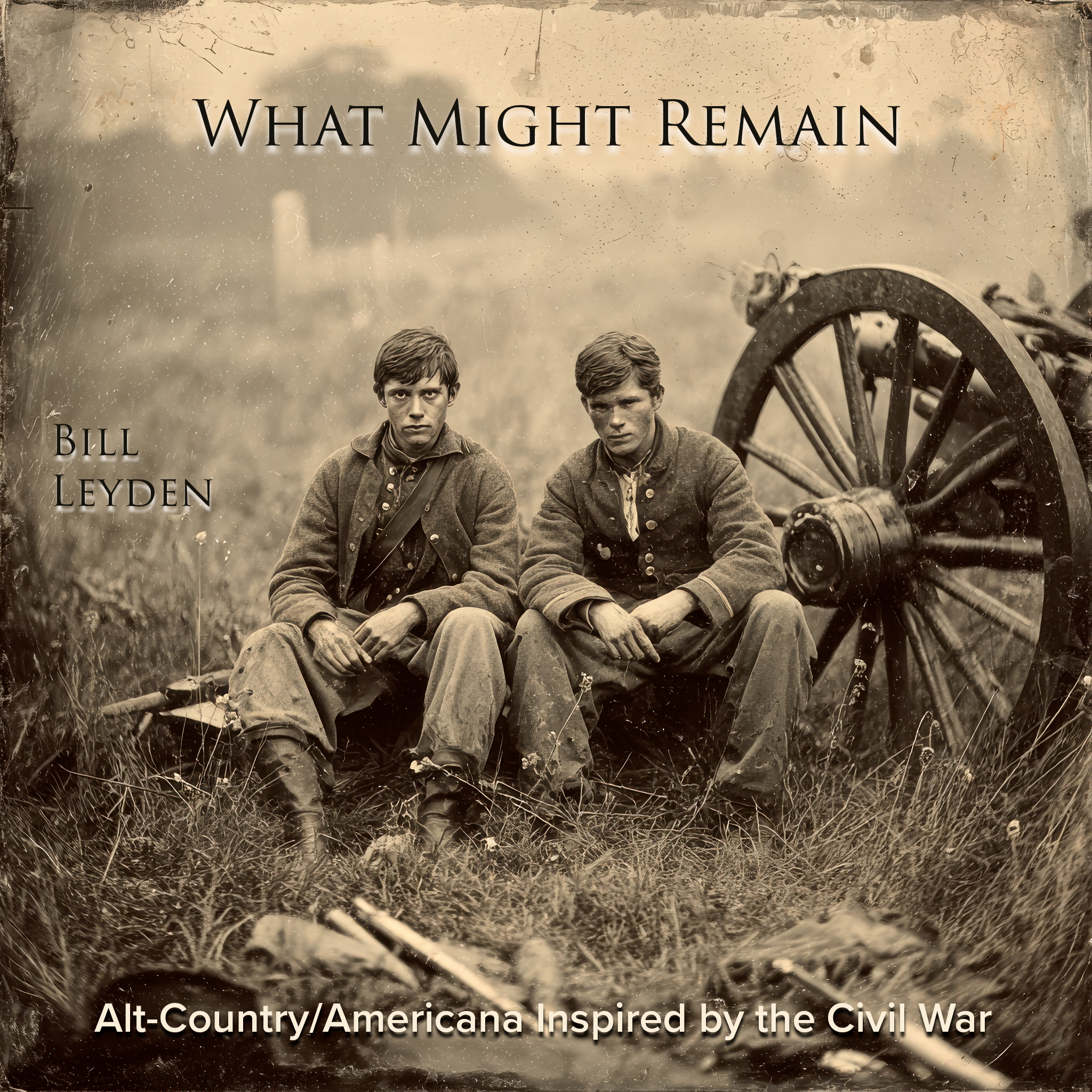
“The Copse of Trees” is one of nine tracks on “What Might Remain,” an album that explores the human cost of the Civil War from multiple perspectives. While this track gives voice to Confederate desperation and failure, other songs in the collection explore Union victory, family grief, and the long shadows cast by trauma. Together, they ask what endures when the battles end and the speeches are over.

Why These Stories Still Matter

In our current moment of political division and social upheaval, songs like “The Copse of Trees” remind us that history isn’t about heroes and villains—it’s about human beings caught in circumstances beyond their control, making impossible choices, and living with the consequences. The Confederate soldier in this song isn’t a symbol or a political statement. He’s a young man far from home, watching his world collapse, trying to survive.

That’s a story that transcends any particular war or cause. It’s a story about resilience, about carrying on when dreams die, about the weight of memory. It’s a story that, 160 years later, still has something to teach us about what it means to be human.


Listen to “The Copse of Trees” and the full album “What Might Remain”:

What moments in your life felt “so close to glory” before everything changed? Share your thoughts in the comments below.

Read Full Post »