"It's all about places, faces and feelings… Now, 'TTFP': Take the … 'Fffff—-fantastic' Picture!" (Friend and Photographic Mentor, Monte Zucker 1929-2007)
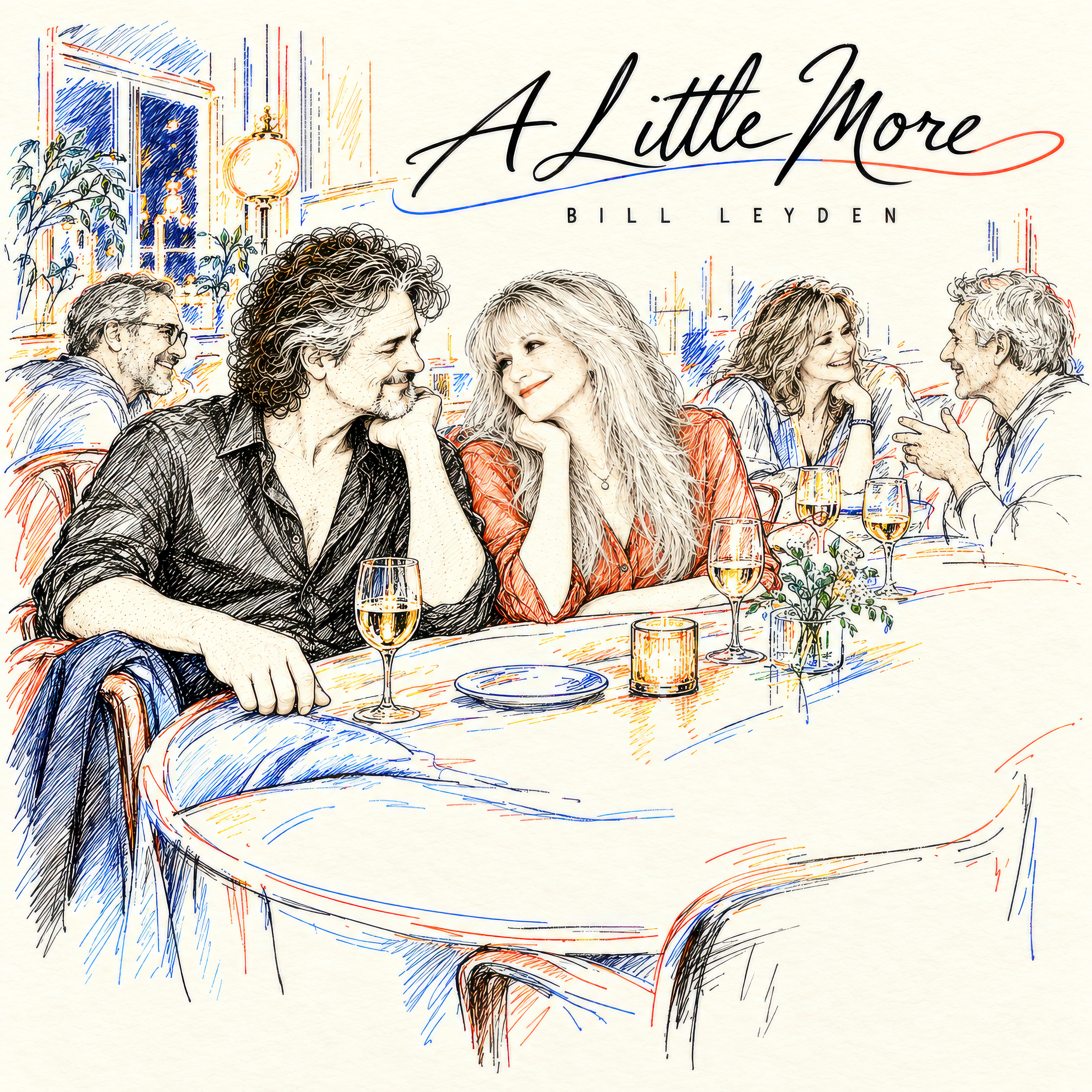
My new album, A Little More, is about the appetite for connection that experience never quite cures. We learn to manage on our own, choose our words, keep our expectations reasonable. Then someone makes us laugh, and wanting very little no longer feels like enough.
These eight songs begin with a wink. There’s a man hearing more encouragement from his doctor than she probably intended, and another whose good judgment isn’t much help with a woman’s knee against his. Beneath the humor are the quieter admissions: wanting someone to stay, finding a reason to call, discovering how good it feels to be known.
The music is guitar-forward, with hints of art rock and close harmonies that occasionally take an unexpected turn. There’s room for the words—and for what the people singing them can’t quite say.
As the album unfolds, affection takes on the weight of memory. What do we keep of someone who is no longer beside us? What do we hope they keep of us? The humor stays, even when the answers grow difficult. Sometimes laughter and missing someone arrive together.
A Little More makes room for imperfect people who still want to be wanted—and who hope, when their name comes up, that someone might smile.
Every once in a while, it’s good to step over a few lines.
That’s what I decided to do with Really.
I wanted to push beyond some of my usual songwriting habits—to let conversations become lyrics, leave more space between things, allow the music to take some unexpected turns, and trust that a song doesn’t always have to explain itself.
It turned out to be tremendous fun.
Really is probably the most avant-garde album I’ve made, but I don’t think that makes it particularly difficult music. There are still guitars, melodies, choruses and harmonies. There are also unusual modes, chords that sometimes hang in the air, complex vocal harmonies, sustained guitars and moments when silence gets to play an instrument too.
And there are people.
Lots of them.
People who are certain about things. People who remember things differently. Someone who can commandeer almost any dinner-table conversation with a story of her own. A couple eating ice cream while watching something questionable on television, with the dog quietly choosing sides.
There’s a Tiffany lamp bought on a trip to New York.
There’s an old photograph with a man in it nobody recognizes, even though his arm is around somebody and he appears to have been having a perfectly good time.
They decide his name might be David.
Why?
Looks like David’s arm.
That’s about as much evidence as anyone has.
I think that’s where I found the personality of this album.
The songs aren’t really trying to deliver answers. They’re interested in those peculiar little moments when people reveal themselves without realizing they’re doing it—the things we say, the things we remember, the things we get completely wrong, and the shorthand that develops between people who have known each other a long time.
By the time I reached the title track, that shorthand had become the song itself.
It begins with two people trying to identify a glass:
Which glass?
The one on the left.
This one?
No, your other left.
The vessel with the pestle?
That’s the one.
Get it?
Got it.
Good.
Eventually all that playful certainty and uncertainty comes down to one much simpler exchange:
You happy?
Yeah.
You sure?
Yeah.
Really?
Really.
That felt like exactly the right place to end the album.
Making Really took me outside my comfort zone, but in a way I thoroughly enjoyed. It reminded me that experimentation doesn’t require abandoning the things you love about making music. Sometimes it just means giving yourself permission to approach them from a different direction.
Eight songs. A few peculiar people. Some questionable memories. One unidentified arm.
Tell somebody they probably can’t have something—or perhaps it’s intended for someone a little more discerning—and watch how quickly “I don’t need it” becomes “How much?”
That little piece of human nature became one of the threads running through my new album, Only for a Select Few.
But somewhere along the way, the idea got bigger.
These songs are about the things we buy, the things we believe, the impressions we maintain, and the wonderfully questionable decisions we make while trying to convince the world—and occasionally ourselves—that we know exactly what we’re doing.
There’s pride here. Romance. Bad judgment. A little swagger. A working band that keeps showing up even when somebody in the audience starts throwing beer bottles. There’s even a man who walks into a store wanting absolutely nothing and leaves with two crocodile attaché cases.
He rides home on a bicycle.
It seemed like a good idea at the time.
Maybe We’re All Making It Up a Little
What interests me about these characters isn’t that they’re foolish.
It’s that they’re recognizable.
The person who appears completely self-assured may be improvising. The person everybody wants may wonder whether anybody actually knows her. The fellow who thinks he’s immune to a sales pitch may be the easiest mark in the room.
And sometimes the person sitting at the head of the table—the one everybody expects to have an answer—has simply lived long enough to get a few more things wrong.
That thought eventually became the album closer, “If They Only Knew.”
It also changed the way I thought about the album’s title.
We spend a surprising amount of our lives imagining that somewhere out there are people who have been let in on something the rest of us missed: the masters, the insiders, the discerning few.
Maybe there are.
Then again, maybe they’re looking around for the select few, too.
Listen to Only for a Select Few
The album moves through Americana, country-pop and alt-country, with conversational storytelling, guitars, pedal steel, close country harmonies, humor, and enough rhythm to keep all this introspection from becoming too respectable.
Mostly, though, it’s about people.
People bluffing. People wanting. People falling for things. People learning. People laughing at themselves.
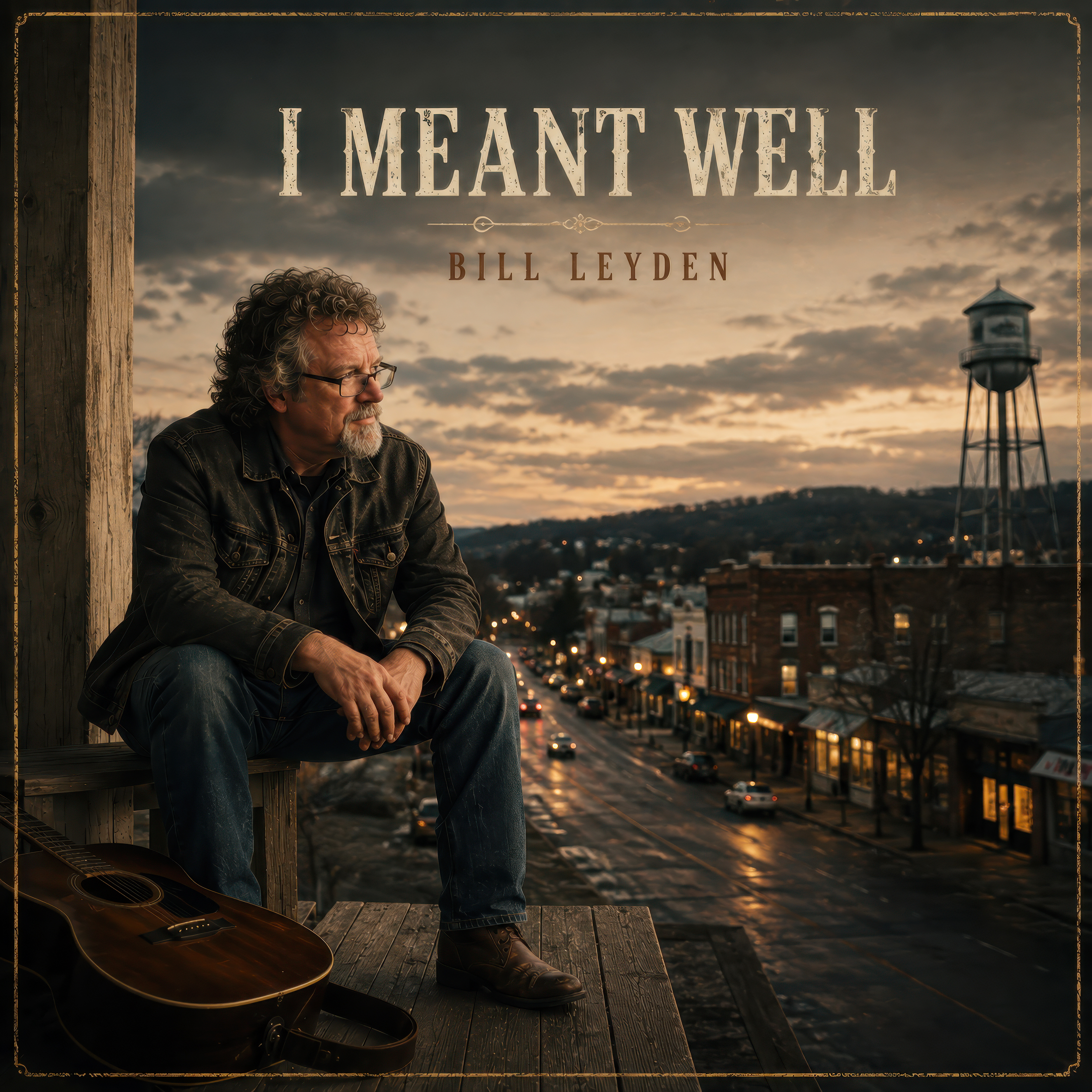
That’s the idea behind I Meant Well, the new Americana and alt-country album from Bill Leyden.
Built around nine vignette-driven songs, the album explores the moments that rarely make headlines but somehow stay with us for years: a glance held a little too long, a lesson learned too late, a local legend everyone knows, a kindness nobody notices, and the quiet realization that good intentions alone don’t always guarantee good outcomes.
Rather than telling one continuous story, I Meant Well unfolds as a series of interconnected moments. The songs take place in dance halls, roadside bars, small-town gathering places, and the private spaces people carry around inside themselves. Throughout the album, a single narrator observes the humor, irony, awkwardness, and humanity that define ordinary life.
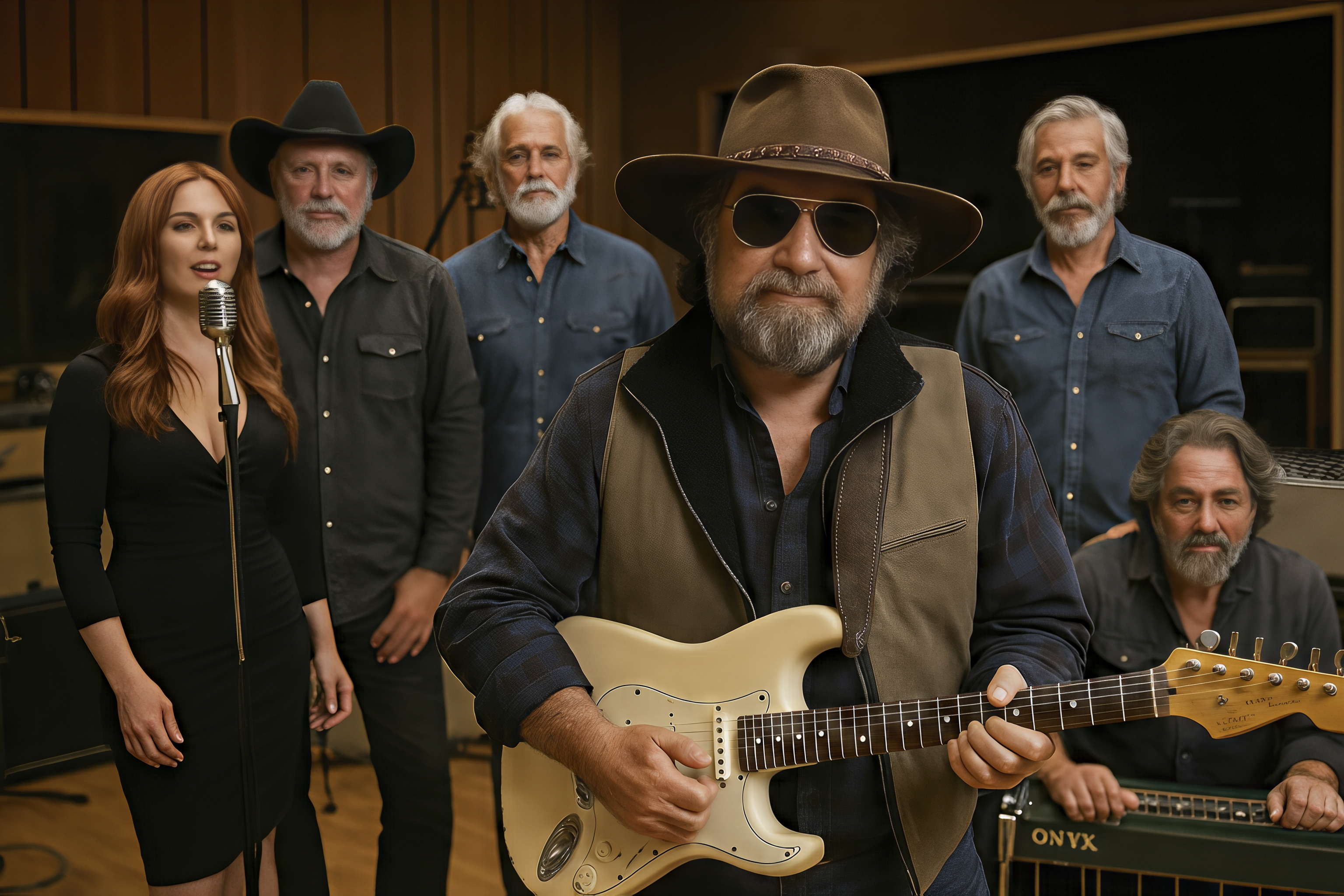
Musically, the record blends Americana, alternative country, roots music, and storytelling traditions into a guitar-forward sound built around conversational vocals, expressive Stratocaster leads, pedal steel textures, and close country harmonies. The result is an album that feels equally at home with classic country storytelling and modern Americana sensibilities.
At its heart, I Meant Well is not about perfection. It’s about accountability, humility, forgiveness, and the belief that even imperfect people continue reaching toward something better.
In a world that often rewards certainty, these songs are more interested in questions than answers.
Sometimes that’s enough.
The Longing for Good
The people in these songs are rarely heroes or villains. They hesitate, misread situations, hold back, speak too late, stay too long, leave too soon, and occasionally stumble into wisdom without realizing it. Like most of us, they are trying to make sense of themselves while living in the company of other imperfect people doing the same.
The album isn’t interested in certainty. It is interested in grace. In the possibility that good intentions matter, even when they are incomplete. In the idea that a meaningful life is built less from grand victories than from small acts of restraint, kindness, accountability, humor, and perseverance.
At its core, I Meant Well is a reflection on the longing for good—the quiet belief that despite our mistakes, misunderstandings, and limitations, there is still something worth reaching for, something worth becoming, and something worth forgiving.
There’s a certain kind of record that doesn’t try to convince you of anything. It just sits with you.
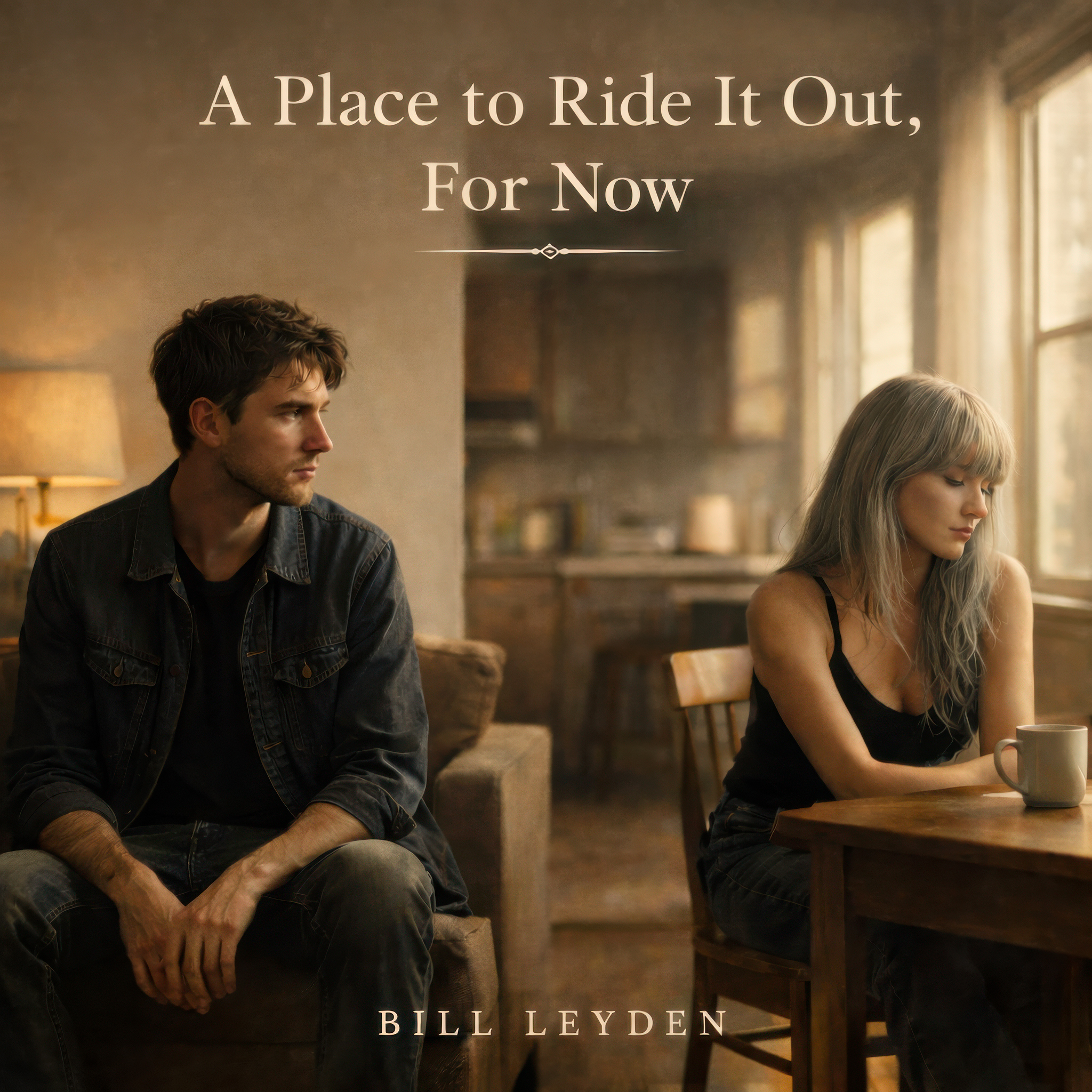
A Place to Ride It Out, for Now was built that way—track by track, without rushing the outcome. No big statements. No forced conclusions. Just moments observed, decisions made (or not made), and the quiet tension of staying versus going.
This is an Americana-leaning, indie-adjacent record—band-forward, conversational, and grounded in detail. The songs don’t explain themselves. They don’t need to.
The album follows a subtle arc—starting with pure observation and ending with action. Along the way, the narrator isn’t always right, doesn’t always understand, and doesn’t always resolve anything cleanly.
That’s the point.
These songs live in the space where things aren’t broken enough to fix, but not quite right either.
You’ll hear:
Fingerpicked guitar work and ES-335 lead lines that speak more than they show off
Tight, conversational rhythm section playing like a band in a room
Close, dry vocals that feel like they’re sitting next to you, not performing at you
No excess. No decoration. Just what belongs.
Standout moments
“We Don’t Talk About Leaving” — what happens when something is clearly there… and no one moves it
“I Went Anyway” — not a dramatic exit, just a decision that finally happens
Several tracks where the narrator gets it wrong—or never quite gets it at all
The idea behind it
This record isn’t about answers. It’s about behavior.
What people do when they don’t say what they mean. What stays in a room. What eventually leaves anyway.
Final note
If you’ve ever stayed longer than you should have—or left without explaining it—this record will probably feel familiar.
It started with quiet evenings on the Gettysburg battlefield.
Some places in America never quite fall silent.
Years ago, when I was in the service, I often traveled back and forth to Washington, D.C. on temporary duty. On several of those trips I found myself stopping in Gettysburg. Eventually I began staying at the Doubleday Inn, right there on the battlefield itself.
In the mornings I would drive from that quiet, rolling ground into Washington. But every evening I returned to the fields.
Gettysburg is not a loud place. It is wide and still. The wind moves through the grass, and the monuments stand like quiet witnesses. Walking those fields, it’s impossible not to feel that something happened there that still echoes.
You start to imagine the letters that were written. The letters that were never sent. The men who never returned to read them.
Those impressions stayed with me.
Years later, while working in software development, I had the opportunity to attend a Windows World competition in Atlanta hosted by Bill Gates and Microsoft. Atlanta itself carries its own deep Civil War memory. Even driving along the freeways, you notice something unusual: nearly every exit seems to bear the name of a battlefield.
Kennesaw. Marietta. Resaca. Chickamauga.
The war is still written across the landscape.
What struck me most wasn’t politics or strategy—it was the feeling that the stories had never quite left. The Civil War wasn’t just something in a history book. It lived on in the places, the names, and the quiet sentiment that still lingers in those hills and towns.
That realization planted a seed.
As a songwriter working primarily in Americana and country storytelling, I began wondering what it would sound like to explore those memories through music—not as a history lesson, but as human stories.
Not the battles themselves.
But the moments around them.
A widow standing beside Antietam Creek. A soldier saved by a coin in his vest. The strange glow of wounded men at Shiloh. The quiet morning at Appomattox when the war finally ended.
Those reflections eventually became my album Ashes and Letters.
The songs try to capture the highs and lows, the bravery and sorrow, and the deep sentimental currents that still run through the American Civil War. Each track is written from a personal perspective—soldiers, witnesses, survivors—imagined voices drawn from the emotional truth of that era.
I wanted the music to feel like something remembered rather than something explained.
A story carried on the wind.
A letter folded in a coat pocket.
A quiet field where the past still whispers.
Ahes and Letters has now grown into the beginning of a larger series of Civil War–inspired albums, each exploring different voices and moments from that time. These songs are not meant to glorify war, but to remember the humanity inside it—the courage, the heartbreak, and the long shadow it left across the American landscape.
The album is now available on all major streaming platforms, and you can also listen on Bandcamp here:
If you ever find yourself walking through Gettysburg, or driving past one of those old battlefield names along a Georgia highway, you may feel what I felt—that history in this country is not as distant as we sometimes think.
Sometimes it is only waiting for someone to listen.
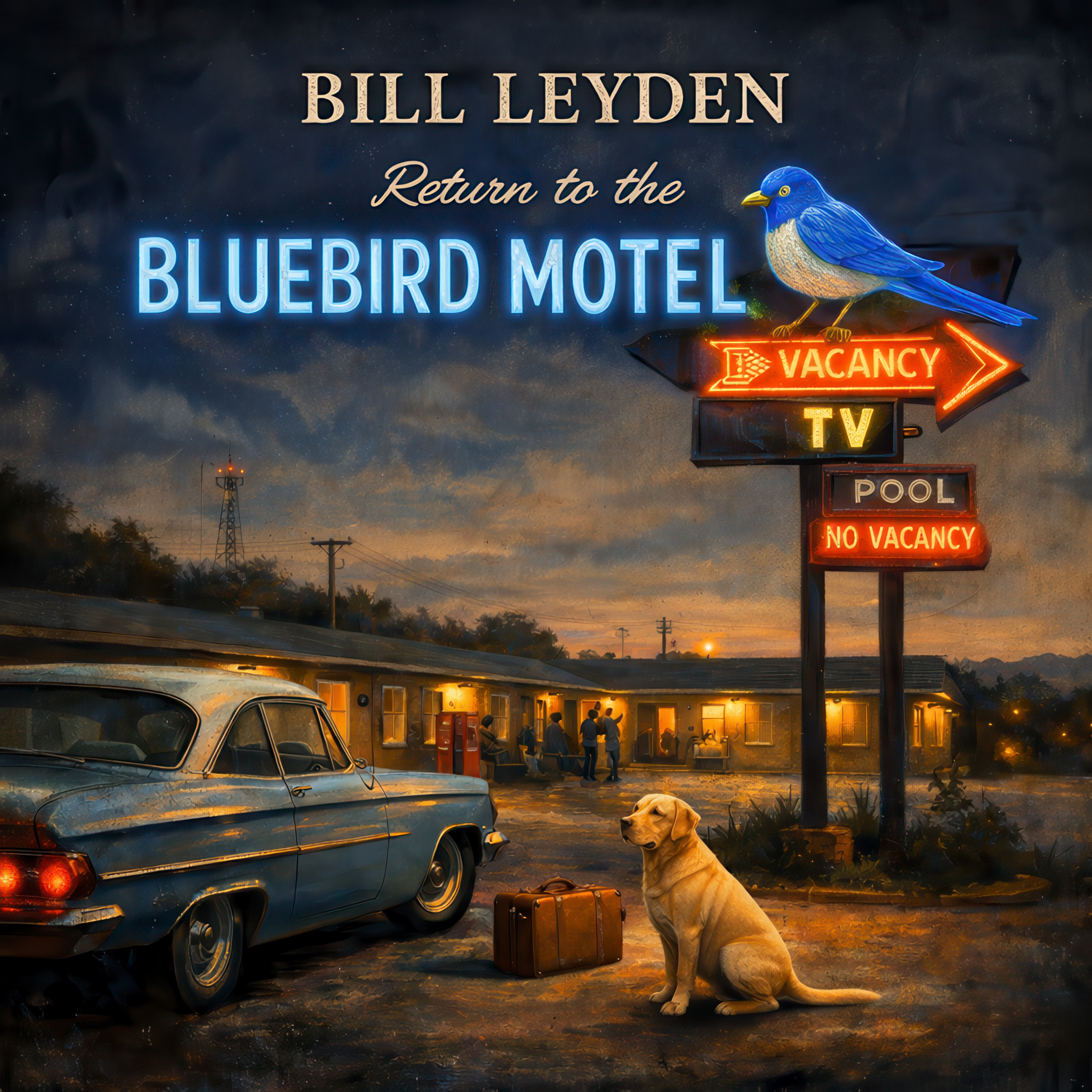
Return to the Bluebird Motel is the newest installment in the Bluebird series — a collection of albums that follow one voice across confession, clarity, distance, and renewal.
It joins:
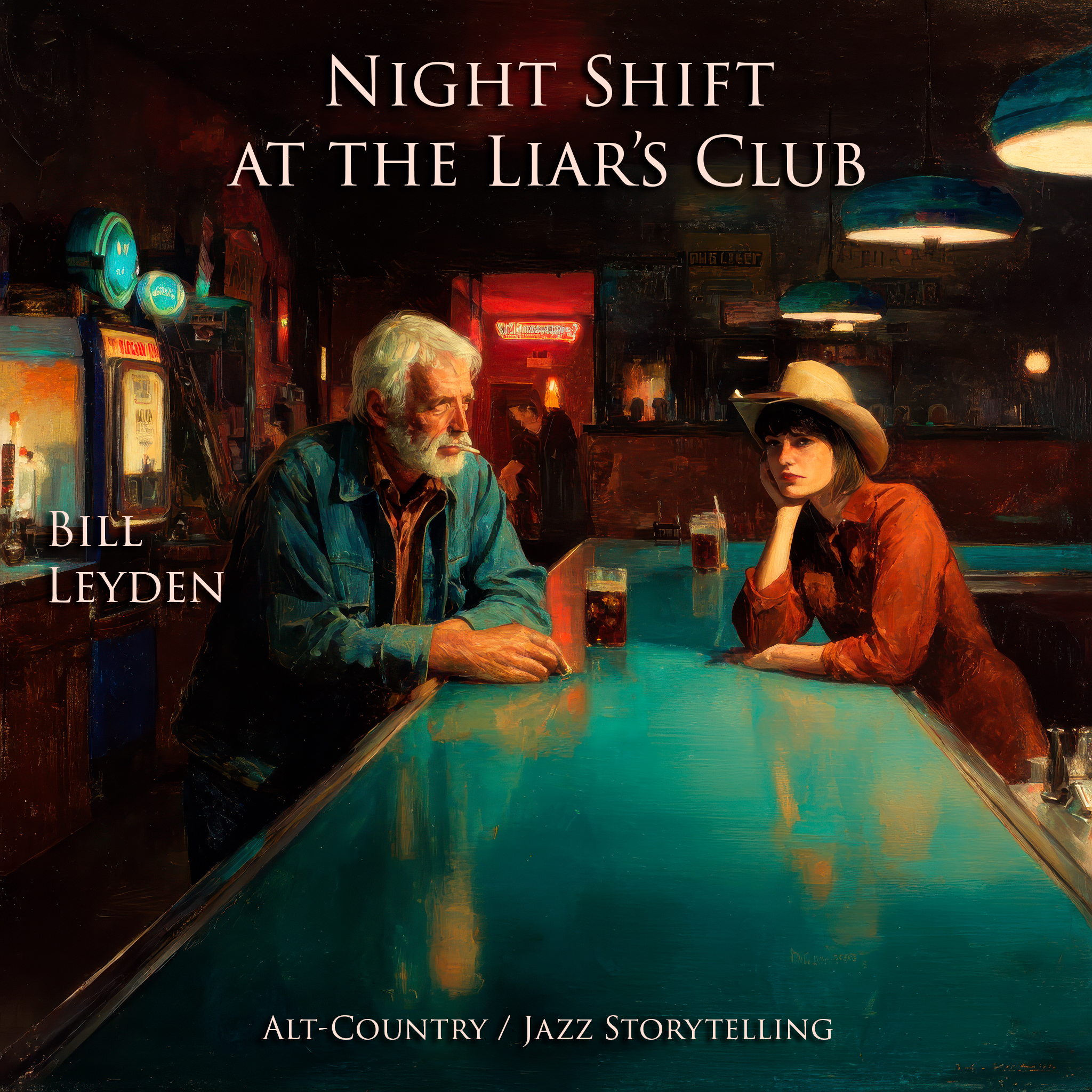
Night Shift at the Liar’s Club
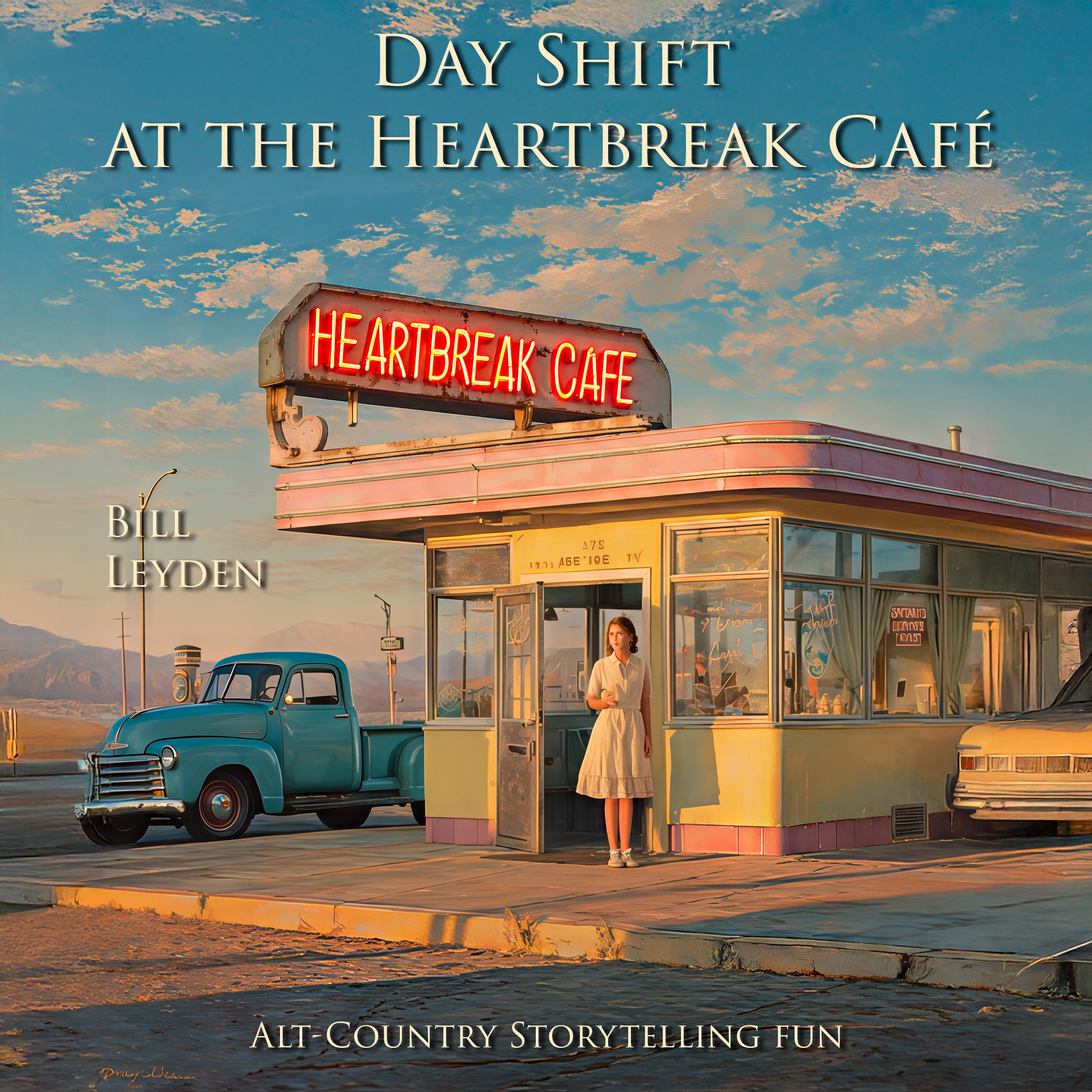
Day Shift at the Heartbreak Café
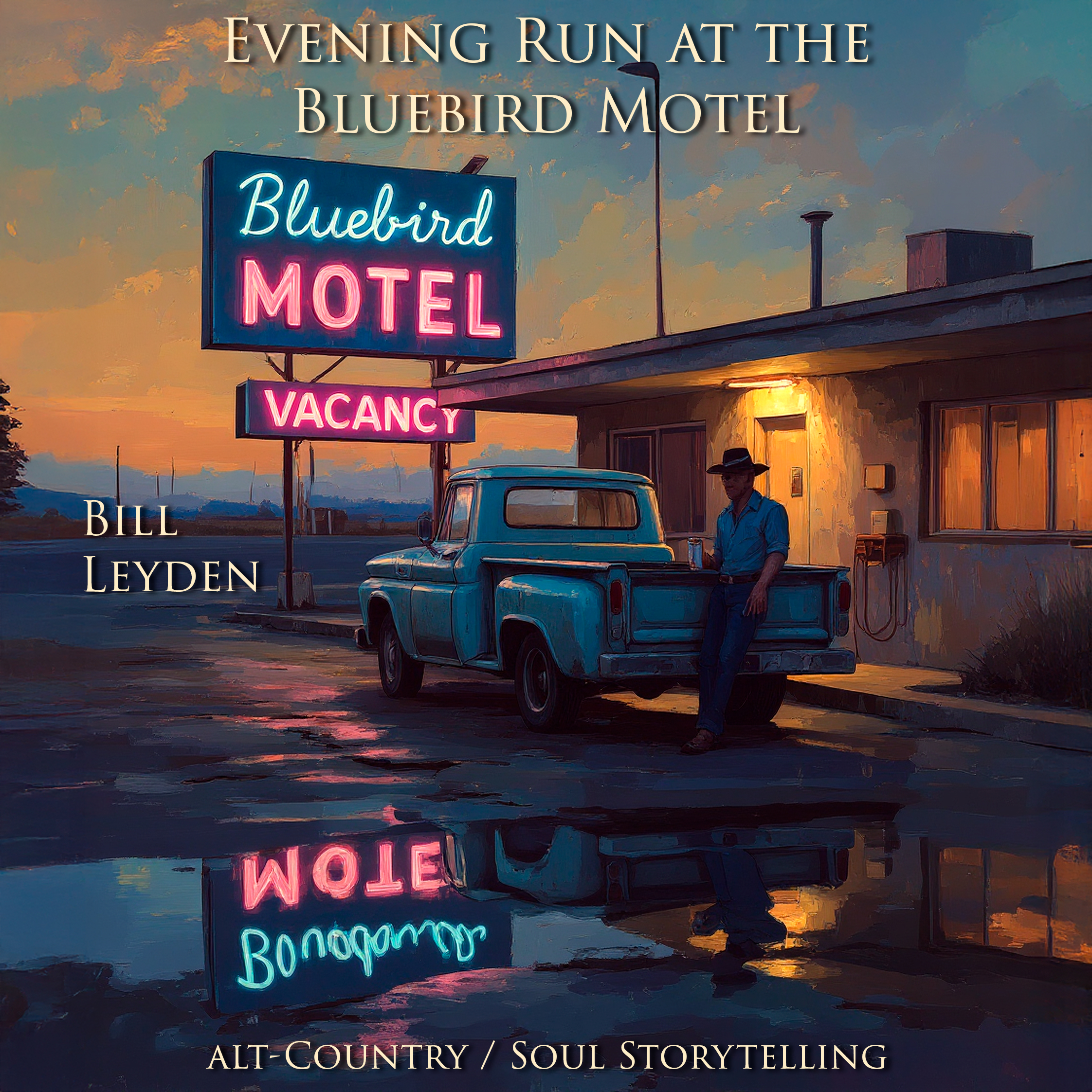
Evening Run at the Bluebird Motel
Together, these records trace a lived-in American journey — told through small towns, long highways, diners, motel rooms, and the quiet realizations that arrive between destinations.
The Road East
In this chapter, the car turns east.
The Pacific has been seen. The illusion has faded. The singer drives with intention, retracing highways across the high desert, through mountain air, along the long plains. A yellow Labrador rides alongside him, steady and watchful.
Memories surface as landscapes change. Familiar places look different in return light. Old emotions settle into perspective. The journey widens the lens.
Each track captures a stop along the way:
A dashboard still holding traces of salt.
Cold air in Flagstaff under the tall pines.
Roadside motels that face the highway and remember passing headlights.
A small town that once thrived along Route 66.
The Ozarks opening up without question.
A lake in morning light.
The Bluebird Motel appears again — not as a destination, but as a remembered place that holds its own quiet gravity.
The Sound of Motion
The album moves at the pace of real travel — steady, grounded, unhurried.
Virtuoso finger-picked nylon-string guitar anchors the songs. Stratocaster lines speak with clarity and restraint. Pedal steel carries sustained emotion. The rhythm section locks in with warmth and confidence. Close harmonies rise in the choruses like shared understanding.
It’s music built for open roads and open windows. Driving music with depth. Storytelling that unfolds in daylight.
The Bluebird Series
If you’ve followed the journey from Night Shift at the Liar’s Club through Evening Run at the Bluebird Motel, this album expands the world and carries it forward.
Just Beyond is a record about how connection begins — and how it deepens.
It starts small. A glass set down carefully. A breath that lingers. Two people standing close enough to notice the quiet between them.
Across eight songs, that quiet opens into something steady and alive.
There’s a hardware store at the end of the day, dust suspended in late sunlight. A bargain bin with the same squeezy toy in two different hands. Dogs that recognize each other before their owners do. A courthouse lawn on a Saturday afternoon. An evening porch with the windows open and warm air settling in.
The dogs appear again and again — leash to leash, nose to nose — moving toward each other without second-guessing. They become a quiet reminder that instinct often arrives before certainty. While the people measure their steps, the dogs simply know. Their ease becomes the thread that pulls the story forward.
Each moment builds gently on the last. A sentence is spoken. A habit softens. Space turns into presence. What begins in pauses learns to grow. What grows begins to bloom.
By the time the porch light comes on, the story feels complete — not because anything was forced, but because something real was allowed to take root.
This album means a lot to me. It’s about discovering that closeness can unfold naturally, that warmth can deepen over time, and that sometimes the most powerful step forward is simply saying the first word.
Just Beyond begins in restraint and ends in connection — guided, in its own quiet way, by two dogs who were never afraid to walk toward each other.
A deep dive into the heartbreak of Pickett’s Charge through song
“We’re almost there, I can see the trees…”
Those opening lines of “The Copse of Trees” transport listeners to July 3, 1863—the third and final day of the Battle of Gettysburg. It’s a moment frozen in American memory: 15,000 Confederate soldiers stepping off across nearly a mile of open Pennsylvania farmland, marching toward a small grove of trees that represented their last, desperate hope for victory.
The Historical Moment
Pickett’s Charge has been called the “high-water mark of the Confederacy”—the moment when the Confederate cause came closest to success before breaking apart forever. General Robert E. Lee had gambled everything on one final, massive assault against the Union center on Cemetery Ridge. The target was a copse of trees that seemed almost within reach.
But as our narrator discovers in the song, proximity means nothing when dreams are collapsing. General Lewis Armistead, leading his men with his hat on the tip of his sword, would make it over the stone wall before falling mortally wounded. The charge that began with such hope would end in devastating failure.
The Power of First Person
What makes “The Copse of Trees” particularly powerful is its intimate, first-person perspective. Rather than observing the charge from a historical distance, we experience it through the eyes of a single Confederate soldier watching his world collapse in real time:
“Then Armistead stumbles, hat in the dust, The general’s down, the line goes slack. Boys are falling, the charge is broken, How in God’s name do I get back?”
This isn’t about military strategy or grand causes. It’s about a young man realizing that the trees he could almost touch might as well be a thousand miles away, and that his biggest concern is no longer victory—it’s simply surviving the retreat across that terrible open ground.
Universal Truths in Historical Moments
The genius of “The Copse of Trees” lies in how it transforms a specific Civil War moment into something universally recognizable. We’ve all had those moments when success seemed within reach, when we could “taste” our goal, only to watch everything fall apart. We’ve all faced the daunting journey back from failure, wondering how we’ll make it through.
The song’s final verse carries the deepest wound:
“The Copse of Trees still haunts my sleep, I see it when I close my eyes. The Copse of Trees, so close to glory— So far from where hope dies.”
This isn’t just about a Civil War battle. It’s about the dreams that remain tantalizingly close in our memories, the ones we almost achieved before circumstances tore them away. It’s about living with the weight of “what might have been.”
Musical Landscape
The track’s musical arrangement perfectly mirrors its emotional journey. Opening with contemplative fingerpicked guitar and that haunting electric guitar accents, it builds toward the charge’s climactic moment before settling into the somber reality of retreat and lifelong regret. The inclusion of fiddle with Celtic influences adds that elegiac quality that makes this track such a powerful modern tribute to to Civil War memory.
Part of a Larger Story
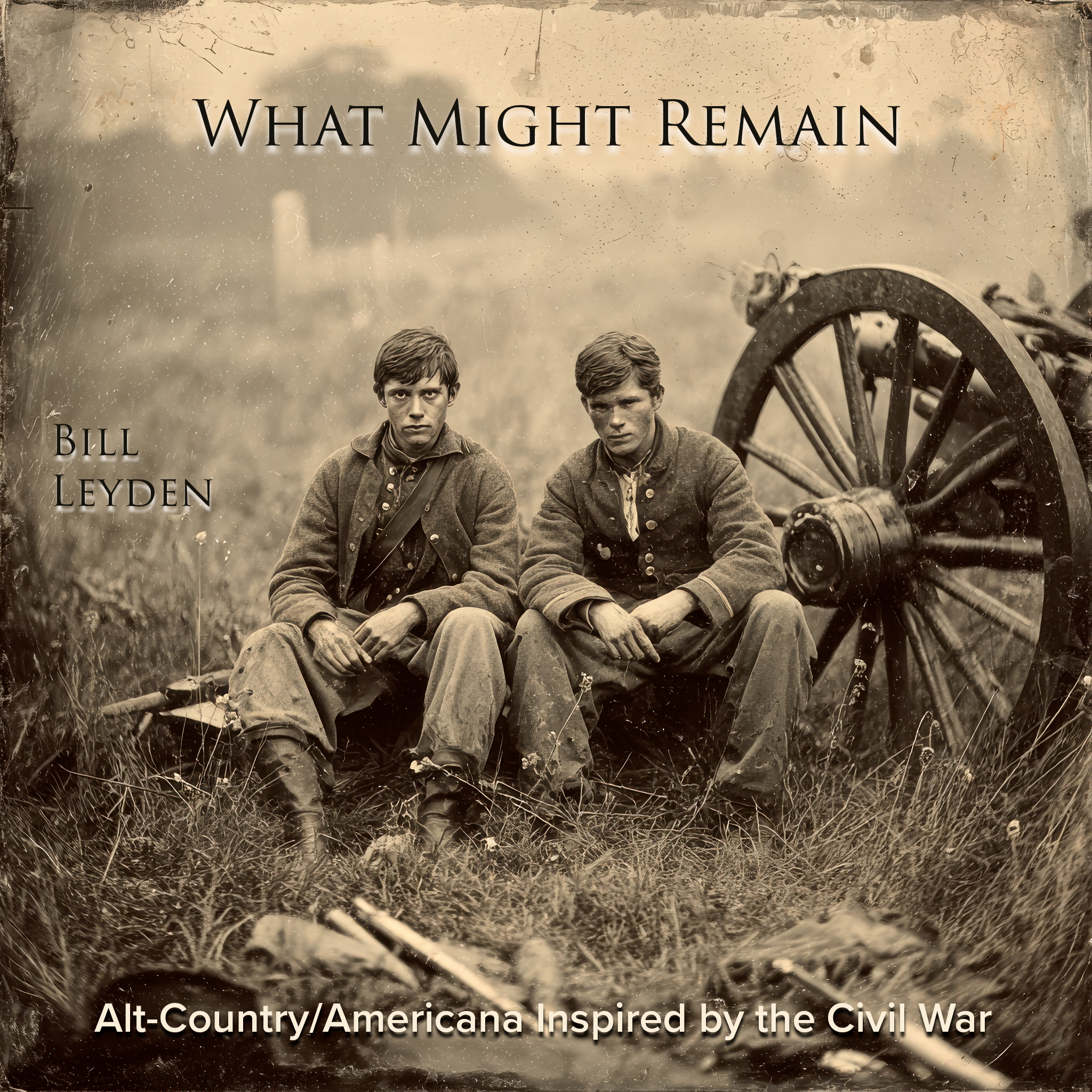
“The Copse of Trees” is one of nine tracks on “What Might Remain,” an album that explores the human cost of the Civil War from multiple perspectives. While this track gives voice to Confederate desperation and failure, other songs in the collection explore Union victory, family grief, and the long shadows cast by trauma. Together, they ask what endures when the battles end and the speeches are over.
Why These Stories Still Matter
In our current moment of political division and social upheaval, songs like “The Copse of Trees” remind us that history isn’t about heroes and villains—it’s about human beings caught in circumstances beyond their control, making impossible choices, and living with the consequences. The Confederate soldier in this song isn’t a symbol or a political statement. He’s a young man far from home, watching his world collapse, trying to survive.
That’s a story that transcends any particular war or cause. It’s a story about resilience, about carrying on when dreams die, about the weight of memory. It’s a story that, 160 years later, still has something to teach us about what it means to be human.
Listen to “The Copse of Trees” and the full album “What Might Remain”: