Feeds:
Posts
Comments

Posts Tagged ‘Music’

Now streaming on Bandcamp
👉 Listen here

There’s a certain kind of twilight that only happens on the road — that breath between leaving and arriving, when the light turns forgiving and every story feels almost finished.

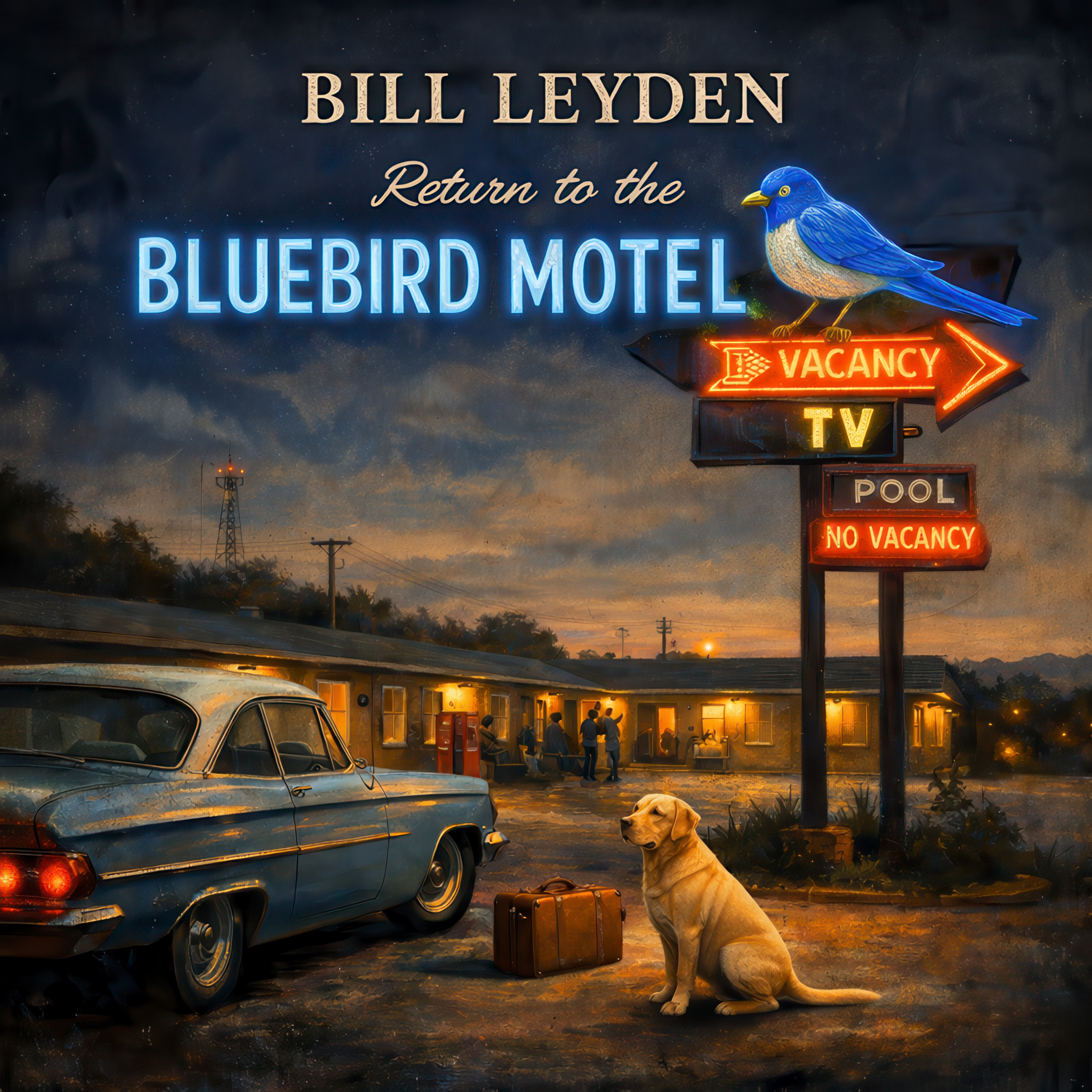
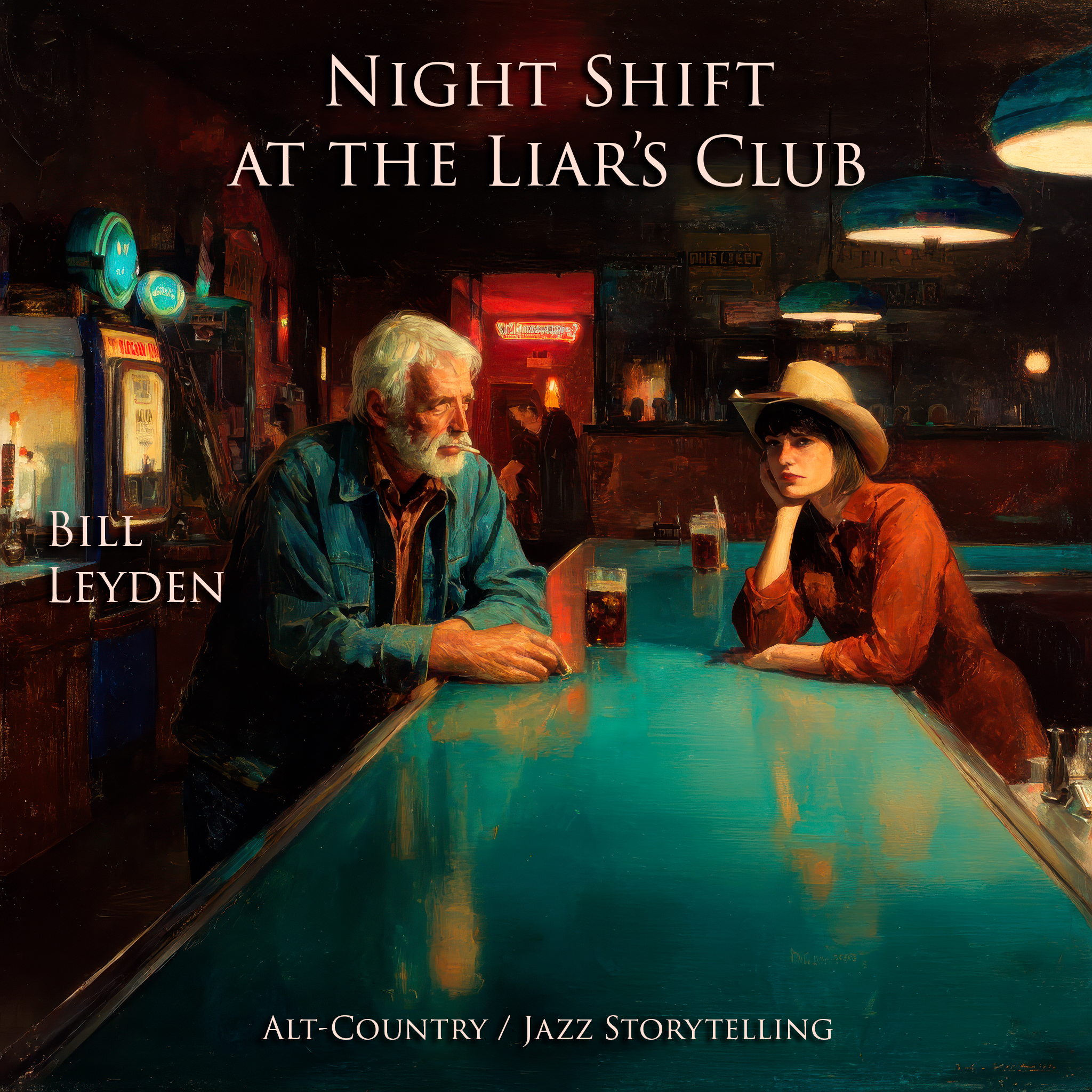
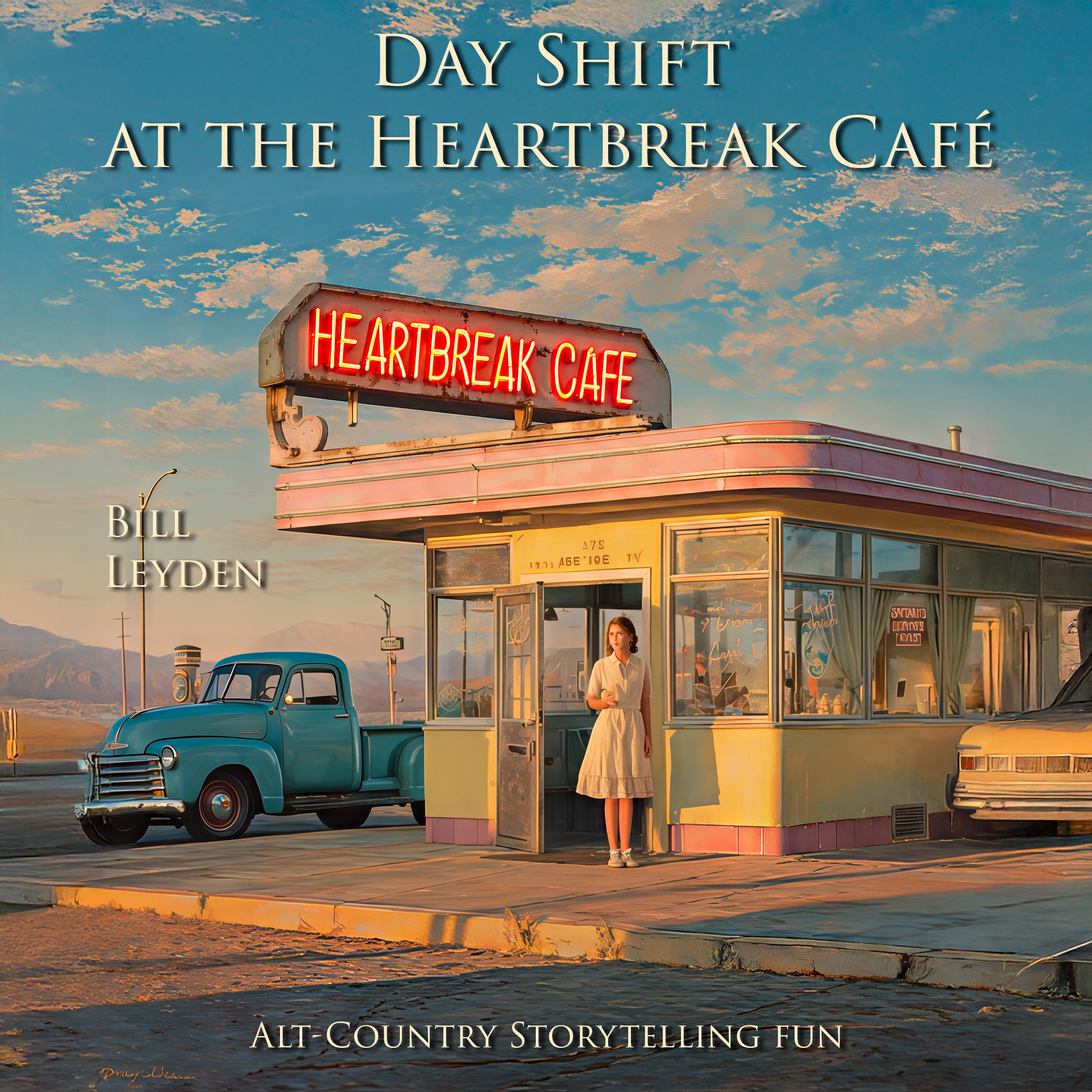
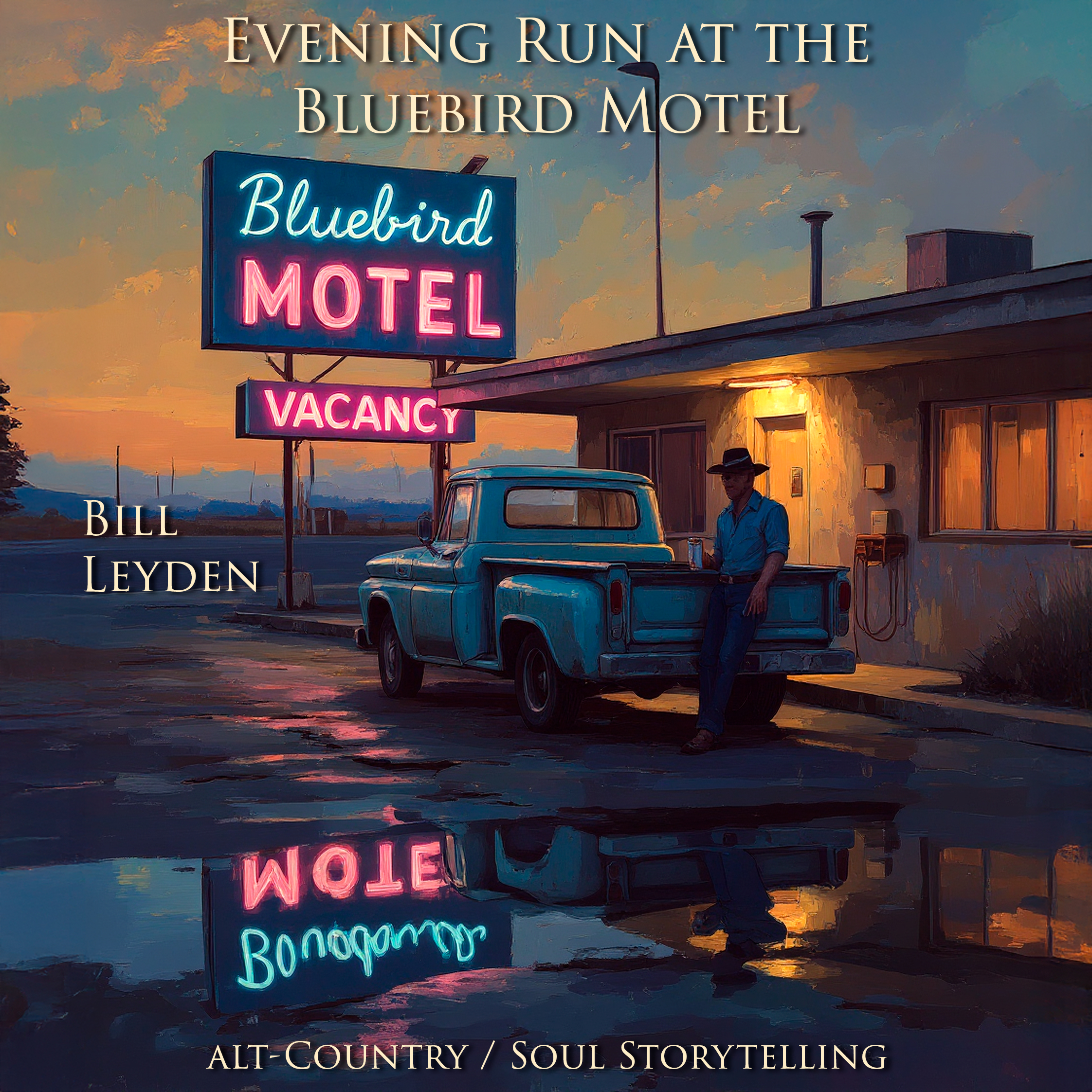
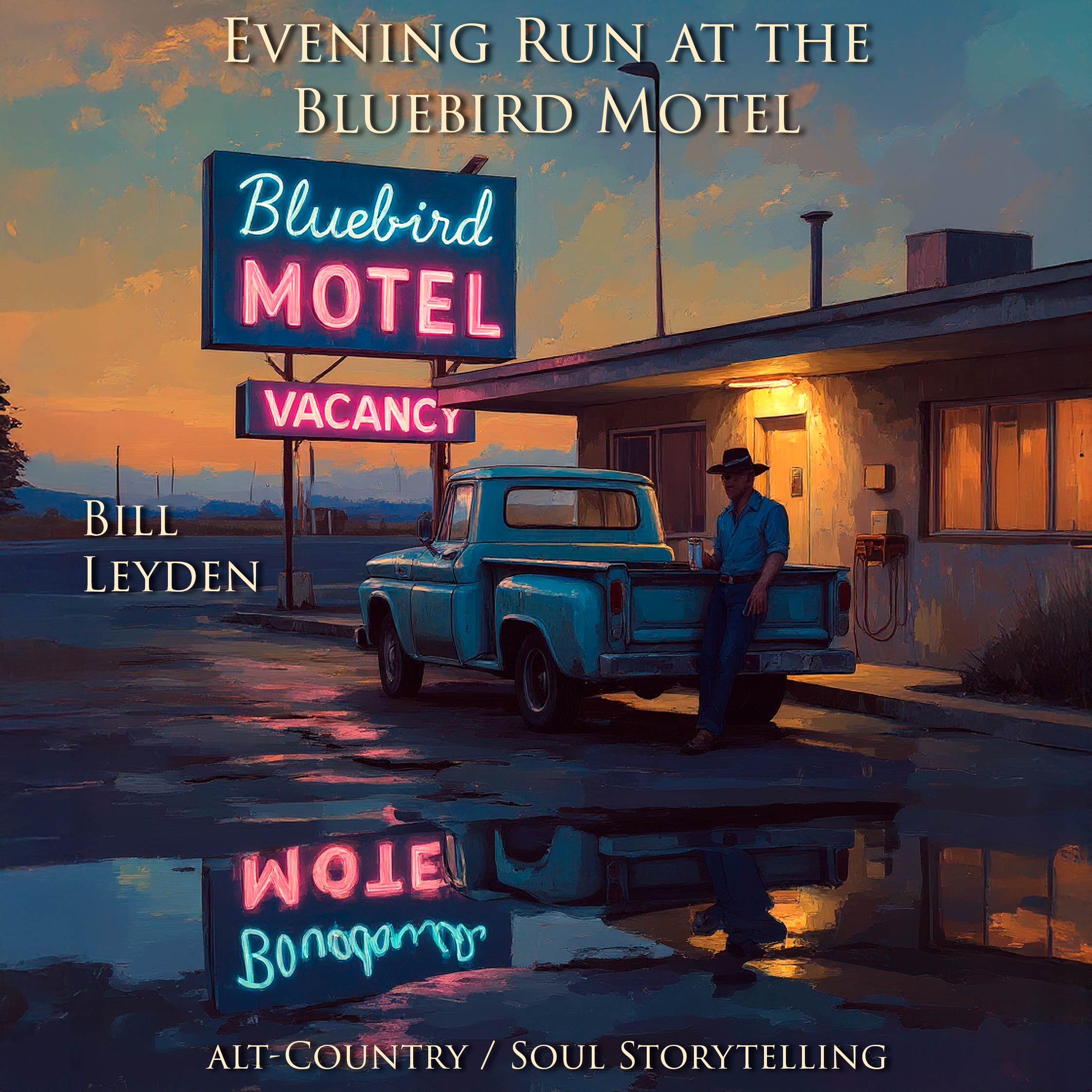
Evening Run at the Bluebird Motel is the third and final chapter of my Bluebird Trilogy, following Night Shift at the Liar’s Club and Day Shift at the Heartbreak Café.
It’s a cinematic Americana album about release — about that moment when you stop looking for redemption and start finding peace in motion.

From the lonely hum of “Vacancy Sign” to the dawn epilogue “Bluebird Light,” each song carries a little humor, a little heartache, and a lot of light.
There’s laughter in “The Ice Machine’s Lullaby,” memory in “Polaroid in the Drawer,” and motion in “Half Tank of Faith.”
The title track, “Evening Run,” drifts like a waltz into forgiveness — the kind you don’t ask for, the kind that just happens when the road quiets down.


Artist’s Reflection – Bill Leyden

When I started writing Night Shift at the Liar’s Club, I thought it was about other people — the lost, the restless, the ones who couldn’t sleep.
By the time I reached Evening Run at the Bluebird Motel, I realized it was about me learning to let go.
These songs were never meant to fix anything; they were meant to forgive something — the past, the road, myself.

The Bluebird trilogy began in confession, passed through redemption, and ends here in release.
Now the motel is miles behind, but I still see its glow sometimes in the rearview.
That soft neon blue isn’t a place anymore — it’s a reminder that peace can find you anywhere, even on the way to somewhere else.


This record closes a long circle for me — one filled with stories, late-night neon, motel walls, and the quiet company of the open road.
It’s a film for the ears, and I hope when you hear it, you feel that same Bluebird light rising somewhere inside you.

Read Full Post »

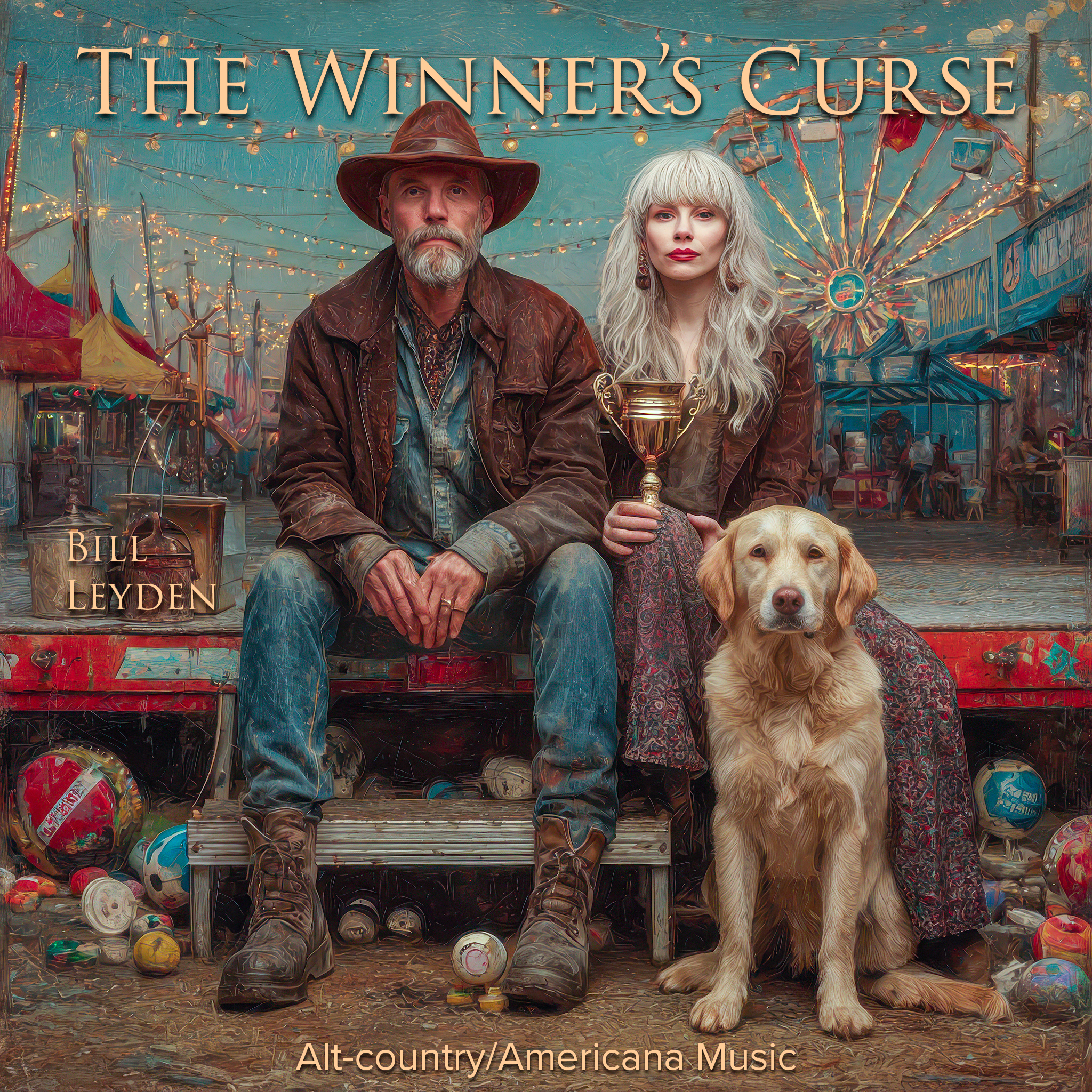
I’m excited to share my new 10-song album, The Winner’s Curse, now streaming on Bandcamp.


What It’s About

The Winner’s Curse is a set of small victories and near misses—moments when luck, timing, and human nature twist the outcome just enough to sting. These songs capture the irony of wanting something just out of reach, the humor of good intentions gone sideways, and the quiet grace of letting go.


The Journey Track by Track

Here’s how the album unfolds:

  1. Shut It Quick – When silence makes you irresistible and speaking up breaks the spell.
  2. Wrong Side of Right – No matter what he tries, love keeps flipping the script.
  3. Big Peccadillos – A sly confession of big-little flaws and guilty pleasures.
  4. Missed It by a Mile – Close enough to taste it, too far to hold it.
  5. Shot Right Up to the Middle – Aiming high and landing squarely in life’s perfect nowhere.
  6. Part-Time Hero – Right place, right time, accidental heroism with a humble shrug.
  7. Guess I Shoulda – Small hesitations that ripple into lasting what-ifs.
  8. Breakin’ a Lucky Streak – Catching a sudden run of fortune, knowing it can’t last.
  9. Toronto Layover – A fleeting airport romance that turns into a lesson in grace.
  10. Round and Round – Life’s lessons looping back on themselves with a knowing smile.

Why It Matters

These songs live in the everyday choices that shape us:
– The wave you don’t return.
– The hero you never meant to be.
– The love you almost had but never owned.

If you’ve ever felt like you “won” only to realize there was more to the story, you’ll recognize yourself in these tracks.


Listen Now

🎧 The Winner’s Curse on Bandcamp

Thank you for listening and sharing these stories. Every play, every comment, every quiet nod means more than you know.

— Bill Leyden

Read Full Post »

That old feeling starts at about this time of year – when August becomes a memory and the air begins to chill in the mornings. I find myself anticipating the coming season.

Every Christmas tells a story. For me, those stories take shape through music — sometimes playful, sometimes bittersweet, always rooted in love, memory, and tradition. This year, I’ve gathered three albums together as a kind of Christmas series, each with its own voice, but all connected by a search for warmth and truth in the season.

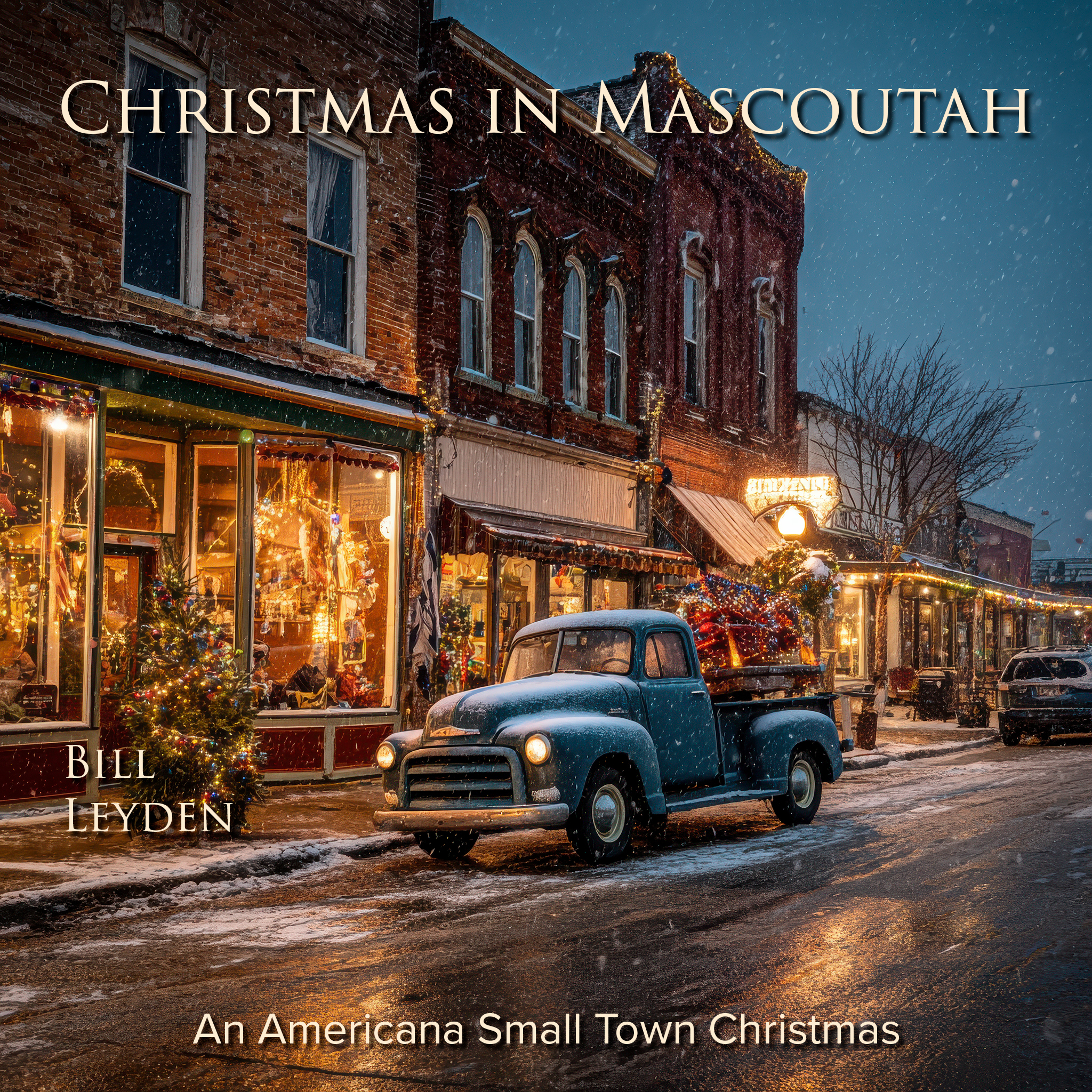
The featured album, Christmas in Mascoutah, is a collection of eight original songs drawn straight from small-town Midwestern life. From the laughter of a parade to the reverence of a midnight service, from the mischief of a yard display war to the tenderness of an empty chair by the tree, it’s a blend of humor, nostalgia, and heart. It’s Americana storytelling with pedal steel, Telecasters, and close country harmonies — a reminder that even in life’s changes, Christmas traditions hold us steady.

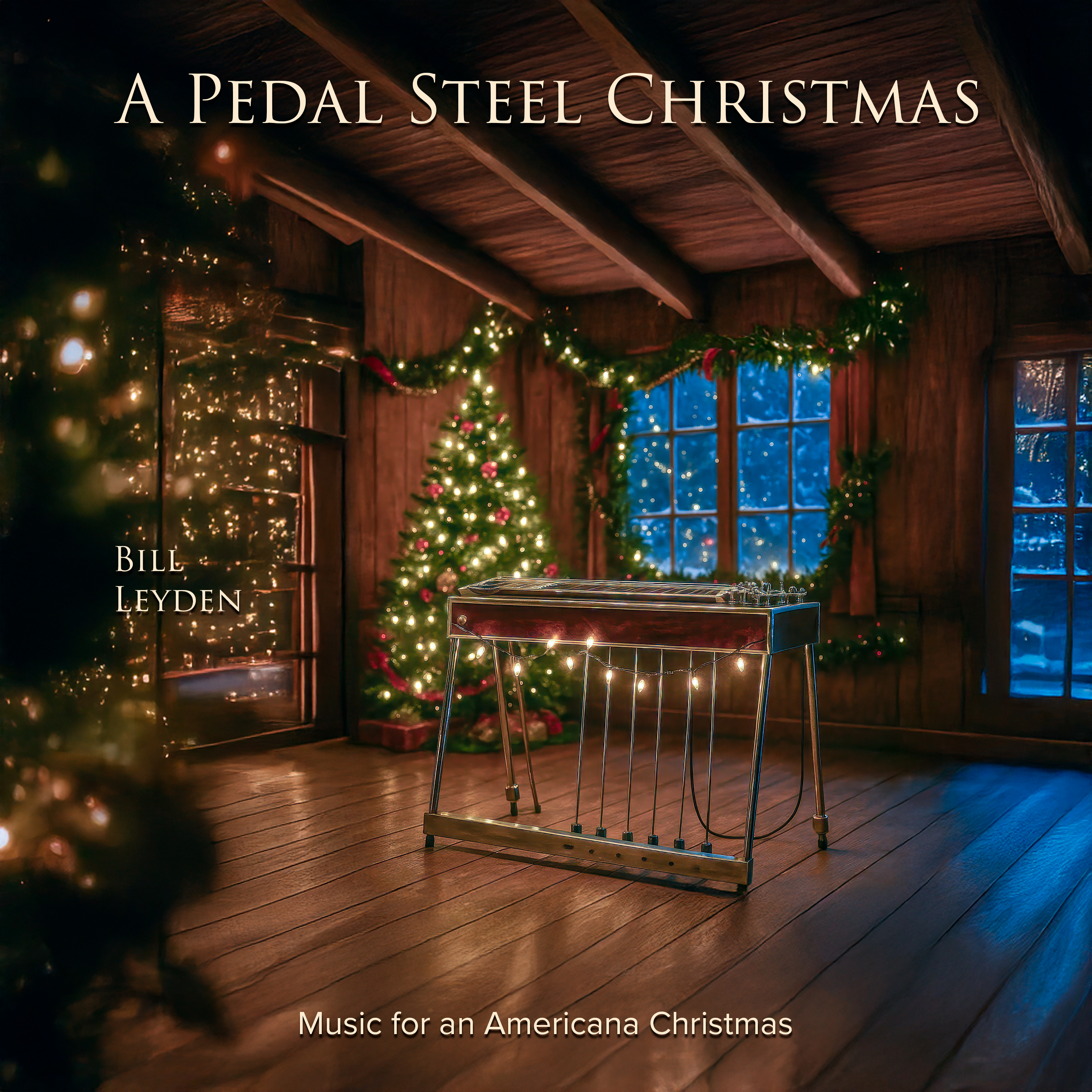
Alongside it, A Pedal Steel Christmas shines the spotlight on the instrument that can make a guitar cry and a heart soar. It’s a pure celebration of sound — the pedal steel weaving through carols and originals alike, giving the season a voice as timeless as the instrument itself. I’ve always admired this instrument and the way it can evoke emotion.

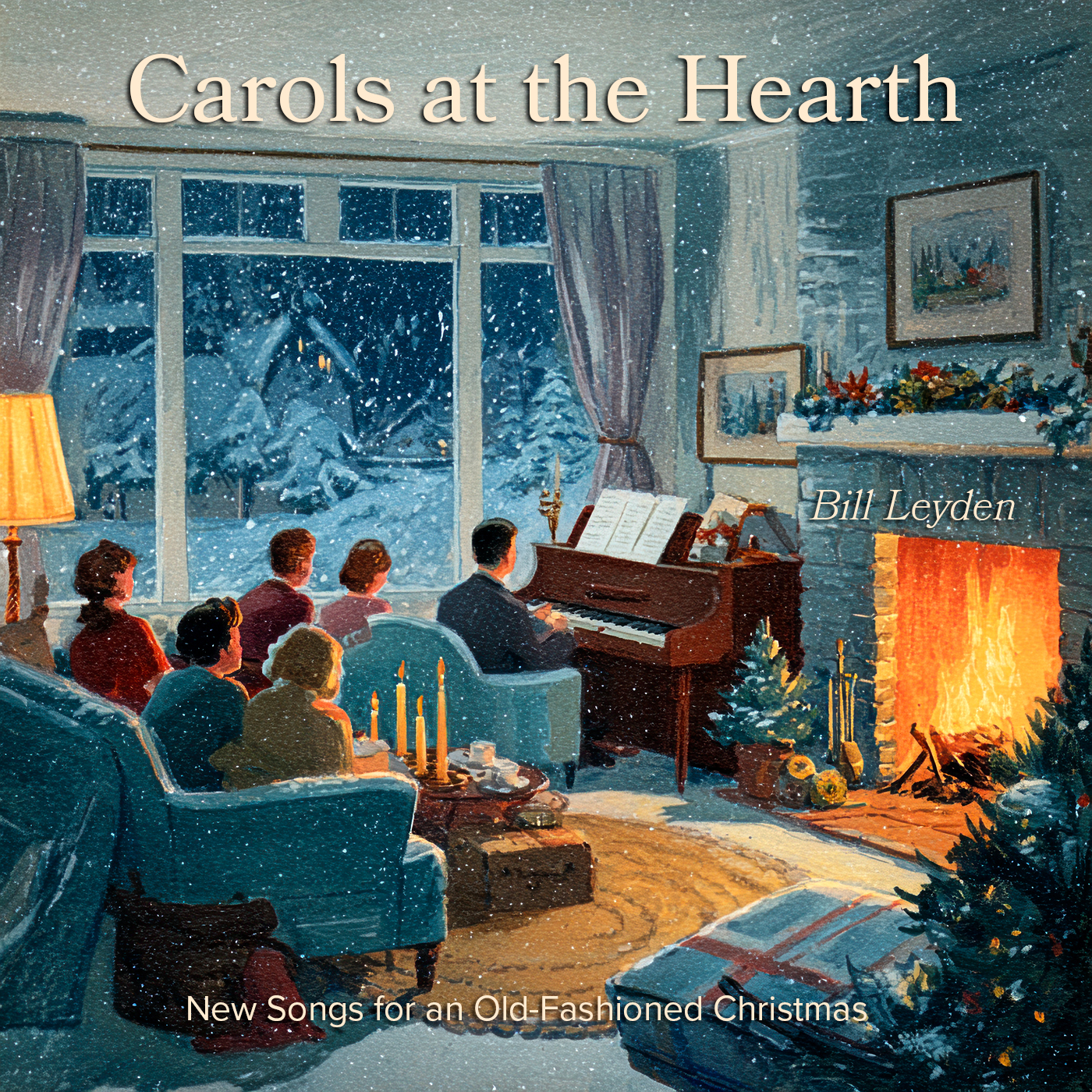
And Carols at the Hearth brings things closer still — intimate, candlelit, and inspired by mid-century jazz harmonies. It’s music for gathering by the fire, where songs feel less like performance and more like presence. I guess the inspiration comes from my early introduction to the wonderful carols of Alfred S. Burt and knowing his surviving family. In their home, Christmas came alive with decor, gatherings of friends and plenty of food and cheer.

Now, the Americana genre may not be for everyone, but I’d like to think that Toby Keith would have enjoyed Christmas in Mascoutah— for its honesty, for its humor, and for the way it carries a sense of place.

Each of these albums approaches Christmas from a different angle, but together they form a series — three ways of telling the same story: that Christmas, wherever you find it, is about connection, gratitude, and the kind of memories that keep us warm long after the snow melts.

Note:

Mascoutah is a charming small town in southern Illinois surrounded by family farms where life still moves at the pace of the seasons. Main Street has just one traffic light, and every storefront feels like part of the family. When you shop at the grocery, the hardware store, or the diner, chances are you’ll run into lifelong friends — people who know your history as well as your name. It’s the kind of place where Christmas isn’t just a holiday on the calendar, but a gathering of memory, community, and belonging.

Read Full Post »

A deep dive into the heartbreak of Pickett’s Charge through song


“We’re almost there, I can see the trees…”

Those opening lines of “The Copse of Trees” transport listeners to July 3, 1863—the third and final day of the Battle of Gettysburg. It’s a moment frozen in American memory: 15,000 Confederate soldiers stepping off across nearly a mile of open Pennsylvania farmland, marching toward a small grove of trees that represented their last, desperate hope for victory.

The Historical Moment

Pickett’s Charge has been called the “high-water mark of the Confederacy”—the moment when the Confederate cause came closest to success before breaking apart forever. General Robert E. Lee had gambled everything on one final, massive assault against the Union center on Cemetery Ridge. The target was a copse of trees that seemed almost within reach.

But as our narrator discovers in the song, proximity means nothing when dreams are collapsing. General Lewis Armistead, leading his men with his hat on the tip of his sword, would make it over the stone wall before falling mortally wounded. The charge that began with such hope would end in devastating failure.

The Power of First Person

What makes “The Copse of Trees” particularly powerful is its intimate, first-person perspective. Rather than observing the charge from a historical distance, we experience it through the eyes of a single Confederate soldier watching his world collapse in real time:

“Then Armistead stumbles, hat in the dust,
The general’s down, the line goes slack.
Boys are falling, the charge is broken,
How in God’s name do I get back?”

This isn’t about military strategy or grand causes. It’s about a young man realizing that the trees he could almost touch might as well be a thousand miles away, and that his biggest concern is no longer victory—it’s simply surviving the retreat across that terrible open ground.

Universal Truths in Historical Moments

The genius of “The Copse of Trees” lies in how it transforms a specific Civil War moment into something universally recognizable. We’ve all had those moments when success seemed within reach, when we could “taste” our goal, only to watch everything fall apart. We’ve all faced the daunting journey back from failure, wondering how we’ll make it through.

The song’s final verse carries the deepest wound:

“The Copse of Trees still haunts my sleep,
I see it when I close my eyes.
The Copse of Trees, so close to glory—
So far from where hope dies.”

This isn’t just about a Civil War battle. It’s about the dreams that remain tantalizingly close in our memories, the ones we almost achieved before circumstances tore them away. It’s about living with the weight of “what might have been.”

Musical Landscape

The track’s musical arrangement perfectly mirrors its emotional journey. Opening with contemplative fingerpicked guitar and that haunting electric guitar accents, it builds toward the charge’s climactic moment before settling into the somber reality of retreat and lifelong regret. The inclusion of fiddle with Celtic influences adds that elegiac quality that makes this track such a powerful modern tribute to to Civil War memory.

Part of a Larger Story

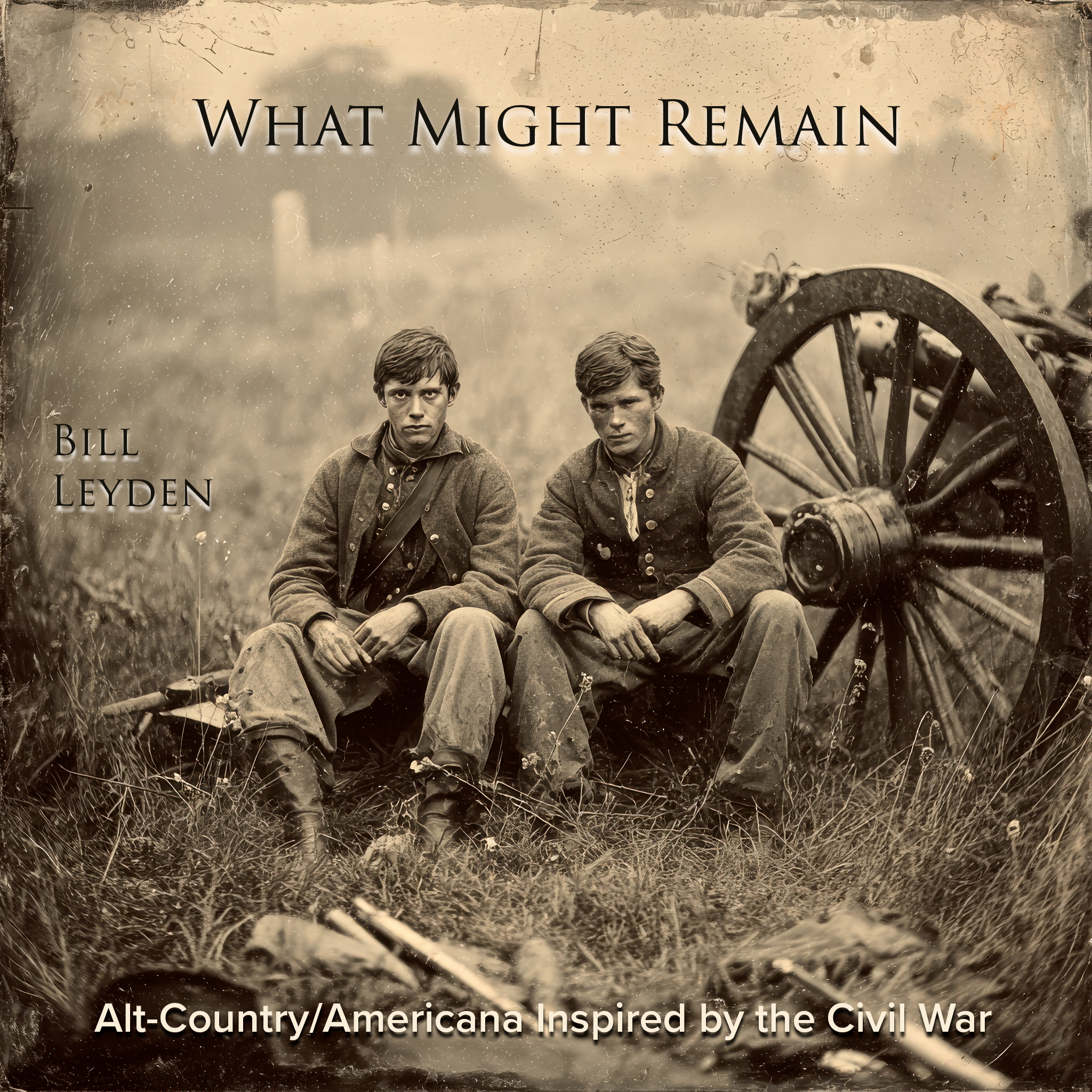
“The Copse of Trees” is one of nine tracks on “What Might Remain,” an album that explores the human cost of the Civil War from multiple perspectives. While this track gives voice to Confederate desperation and failure, other songs in the collection explore Union victory, family grief, and the long shadows cast by trauma. Together, they ask what endures when the battles end and the speeches are over.

Why These Stories Still Matter

In our current moment of political division and social upheaval, songs like “The Copse of Trees” remind us that history isn’t about heroes and villains—it’s about human beings caught in circumstances beyond their control, making impossible choices, and living with the consequences. The Confederate soldier in this song isn’t a symbol or a political statement. He’s a young man far from home, watching his world collapse, trying to survive.

That’s a story that transcends any particular war or cause. It’s a story about resilience, about carrying on when dreams die, about the weight of memory. It’s a story that, 160 years later, still has something to teach us about what it means to be human.


Listen to “The Copse of Trees” and the full album “What Might Remain”:

What moments in your life felt “so close to glory” before everything changed? Share your thoughts in the comments below.

Read Full Post »